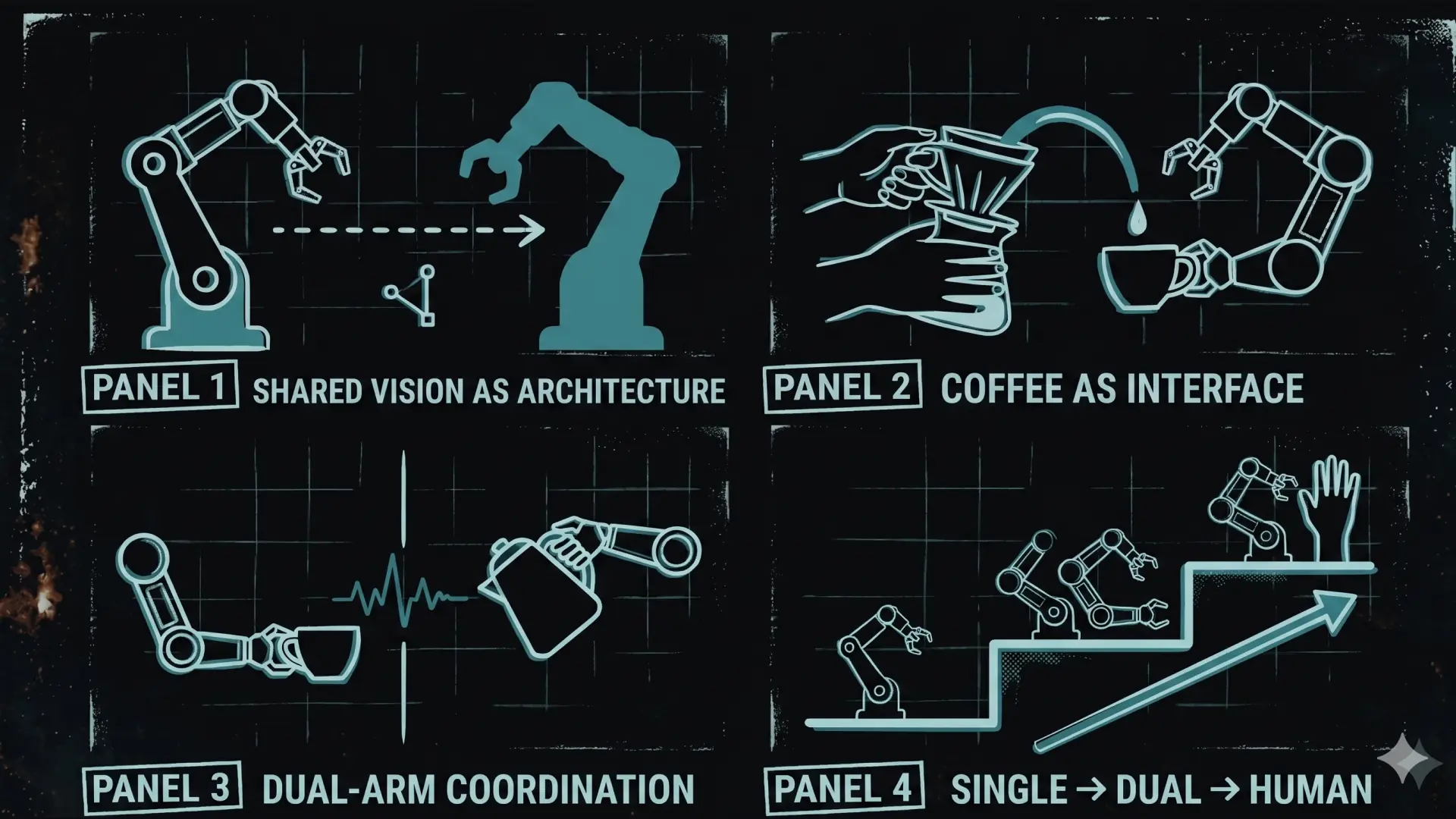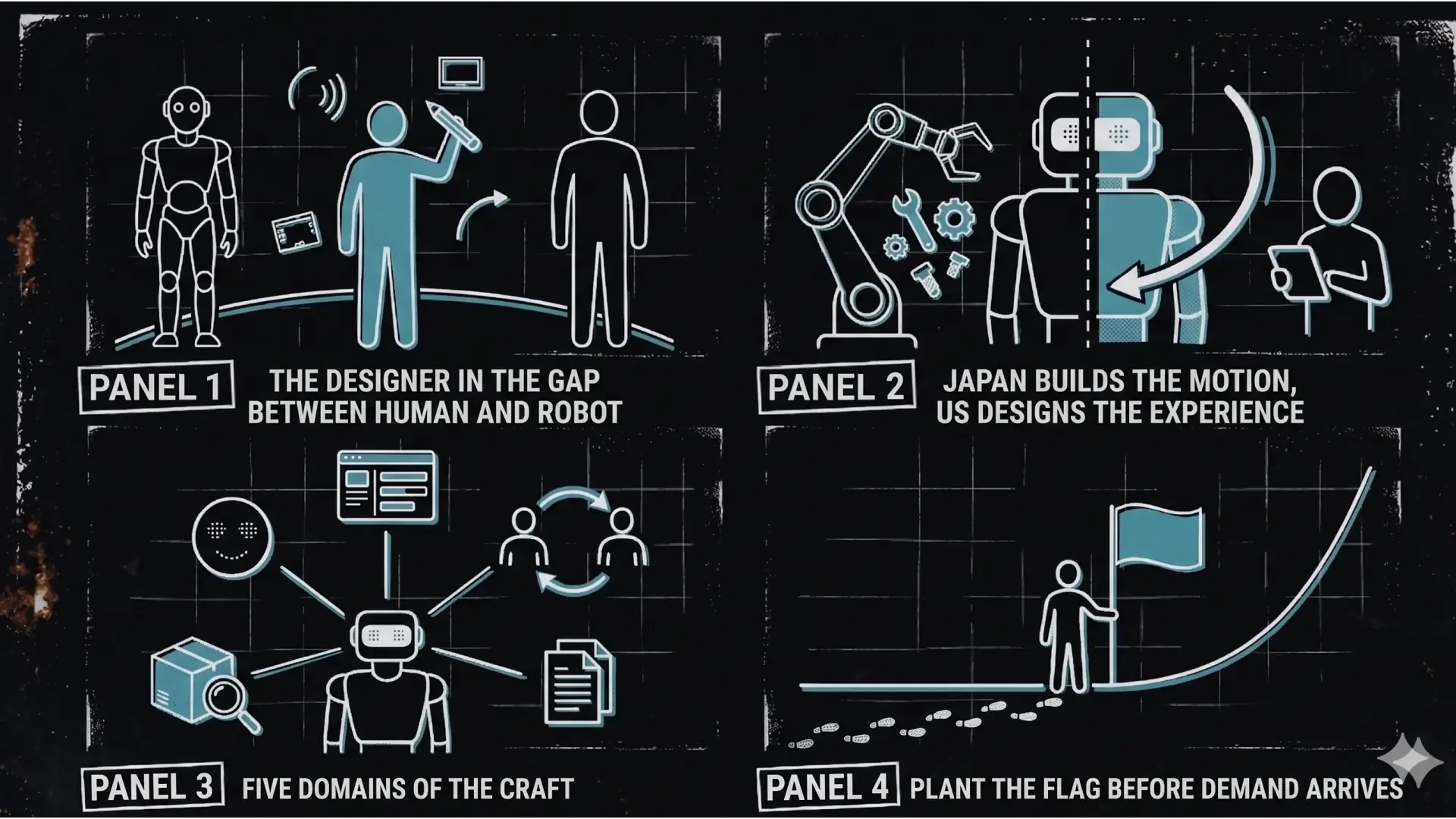
The Day I Read My Own Articles with Three AIs — and Redesigned How I Write
I couldn't tell if my writing style was drifting. A video made the structure obvious.
I watched the Kuuki Design video because I had an unresolved problem.
"A Silicon Valley veteran shows everything after 1,000 hours of real AI agent deployment" — the video featured an ex-Google UX designer exposing his full operational setup: 4 teams, 18 AI agents, each with exactly one role. A drafting agent. A tone consistency agent. An AI-pattern detection agent. A 4-stage review chain.
The problem I'd been carrying: after publishing over 100 articles, I couldn't judge my own writing anymore. Was I falling into repeated phrases? Was "重要なのは〜" creeping in? Was the style flattening? The writer can't see their own blind spots. That's the nature of the problem.
One role per agent, multi-stage review. It felt structurally similar to how I split Claude Code scripts by purpose. That framing was the answer I was looking for — applied to content production.
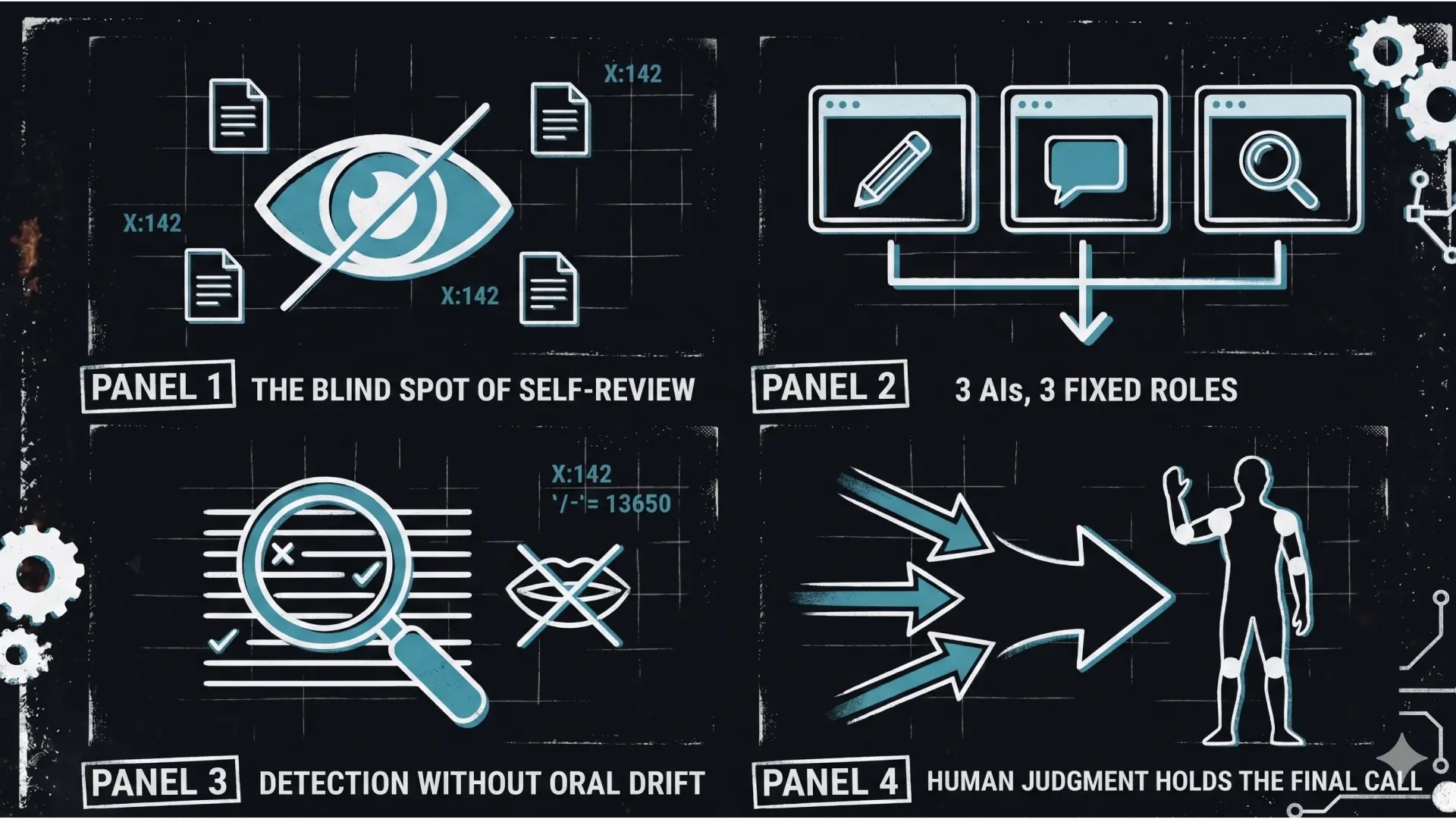
Don't Let Claude Review Claude's Own Output
The risk has always been there: if Pixels to Motors starts reading like AI-generated content, it's over. But assigning the review back to Claude creates a structural contradiction.
— What happens when the generator does the proofreading?
It passes its own patterns undetected. Claude can articulate what "断定の島" or "short cuts" or "grounding in physical objects" means as stylistic traits — but it can't reliably judge whether those traits are present in the draft it just wrote. Self-evaluation by the generator is structurally lenient.
Gemini's advantage here is a reversal: it didn't write the text, so it can judge AI patterns without blind spots. ChatGPT's advantage is different: trained on massive natural-language data, it detects where Japanese prose "catches" in unnatural ways. Each AI gets one job. That was the design principle.
Fixing the Roles
The design is simple.
AI | Role | Strength |
|---|---|---|
Claude | Draft generation, final rewrite, strategy | Project memory, long-form consistency, structure |
ChatGPT (Pixels to Motors Business) | Style consistency check | Custom GPT, long-term memory, tone calibration |
Gemini (paid) | AI-pattern detection + fact verification | Gem, search integration, Deep Research, objectivity |
Me | Final judgment | 29 years of design instinct |
Claude doesn't review Claude's output. That's the principle.
— What does building the actual tools look like?
Built a Custom GPT called "Style Checker v1" in ChatGPT. Built a Gem called "AI-Pattern Detector v1" in Gemini. Asked Claude Code to extract 5 style samples from past articles. The output was a file called ALL_SAMPLES.md.
Claude Code's selection was precise. Five articles across five genres — failure/reflection, technical analysis, industry observation, methodology/philosophy, build-in-public daily log — each with a one-line selection rationale. Character counts ranged from 2,924 to 3,373, which fits cleanly inside a system prompt without pressure.
Designing the AI-Pattern Detection
Gemini misreads the goal as "make it sound more casual." That's wrong. My style moves toward cutting, not loosening. The prompt design took the most time.
The detection criteria:
[DETECTION CRITERIA] Flag and quote any instances of the following patterns.

1. Stock phrases
   - "The important thing is..." / "Interestingly..." / "Something like..."
   - "In conclusion" / "To summarize" / "Three key points" structures

2. Over-abstraction
   - Paragraphs with no proper nouns, numbers, or specific names
   - "Various" / "many" / "generally" appearing repeatedly

3. Over-explanation / redundancy
   - Content that could fit in one sentence split across two

[OUTPUT FORMAT]
- Quote → Problem type → Suggested revision
One Gemini call per article.
ClaudeやChatGPT's memory doesn't carry current specs. Gemini pulls them in real time. That's where it's strong.
One correction was necessary — a note to prevent Gemini from treating "remove AI-ness" as "add casual speech":
[IMPORTANT NOTE]
When suggesting revisions:
- Preserve the "だ・である" declarative register
- Do not propose casual forms like "〜なきゃいけない" or "〜だよね"
- Stay within the expressive range demonstrated in ALL_SAMPLES.md
- "Cut shorter," "assert directly," "ground in physical objects" — these are the directions. Not casualization.
What the Test Run Confirmed
One published article as the test input. Already edited and finalized — a controlled baseline for calibration.
Style Checker v1 surfaced structural traits: "islands of assertion," "short cuts," "grounding in physical objects." It cited past articles by filename while explaining each trait. The sample investment was working.
AI-Pattern Detector v1 returned concrete rewrite examples. NGパターン辞書 category classification (A/B/C) fired correctly. Fact verification ran — macOS Tahoe specs, Iriun configuration, mechArm joint specs — all checked against role assignment.
The two AIs flagged different locations. ChatGPT reads the temperature of the whole piece. Gemini catches on individual words. The separation held exactly as designed.
— Was it usable?
Most flags in the test run came back "no issue." Expected — it was a finished article. But "islands of assertion" was a label I hadn't put on my own patterns before. And the rewrite example ChatGPT offered — "a day that covered both mechanical design and physical placement without running the arm" — was good enough to actually use.
Added overhead: about 10 minutes per article. The generation flow doesn't change. Claude drafts → both AIs in parallel (two browser tabs) → Claude rewrites → I finalize.
Running ChatGPT and Gemini simultaneously means pasting the draft into two tabs at once and working on something else while they process. It's faster than sequential.
The Flow Itself Is the Article
When the setup was done, it became obvious.
This pipeline is itself a Pixels to Motors subject: "How does someone who talks about Motion UX apply Motion UX thinking to their own content production?" The structure became recursive.
When I design robot arm motion, whether the trajectory is right can't be fully measured numerically. The question "does this feel right?" — built from 29 years of design instinct — is the final filter. Content works the same way. Whether the AI's verdict of "this sounds like you" is accurate can only be confirmed by the person it's supposed to sound like. The pipeline supports that judgment. It doesn't replace it.
Claude generates. ChatGPT guards the style. Gemini verifies the facts and detects AI-pattern drift. The three-layer structure is running.