When "Too Accurate" Backfires
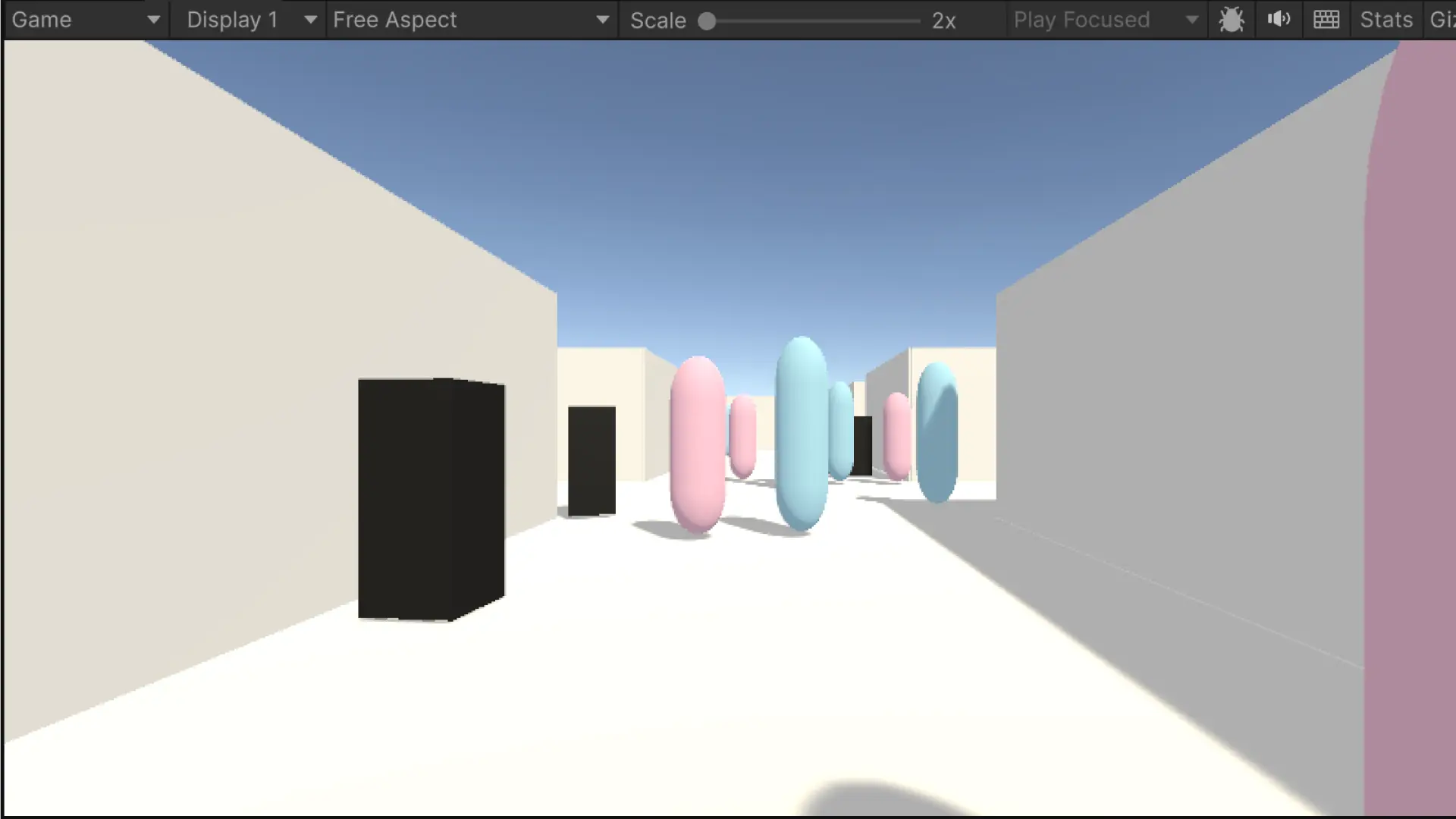
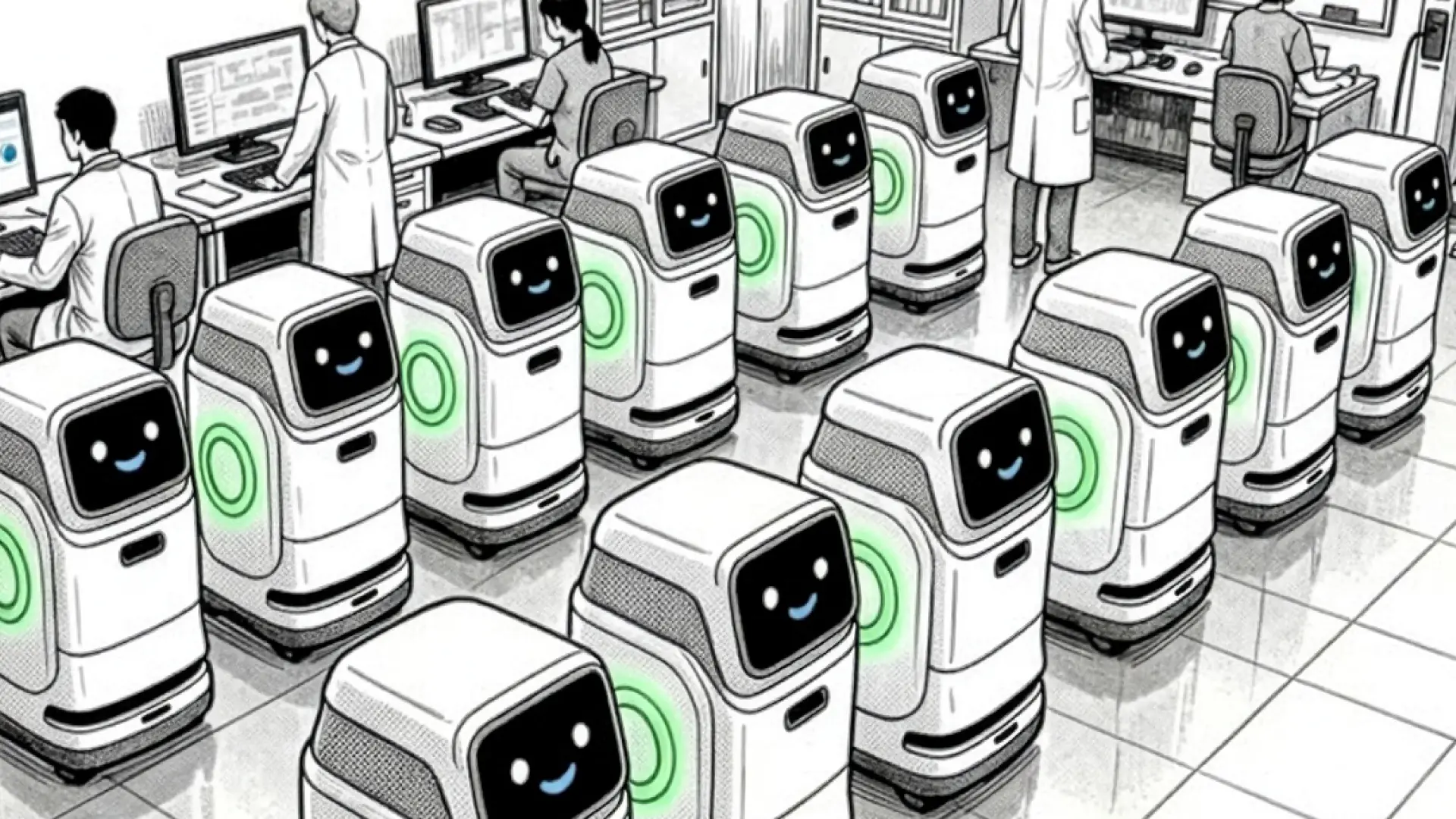
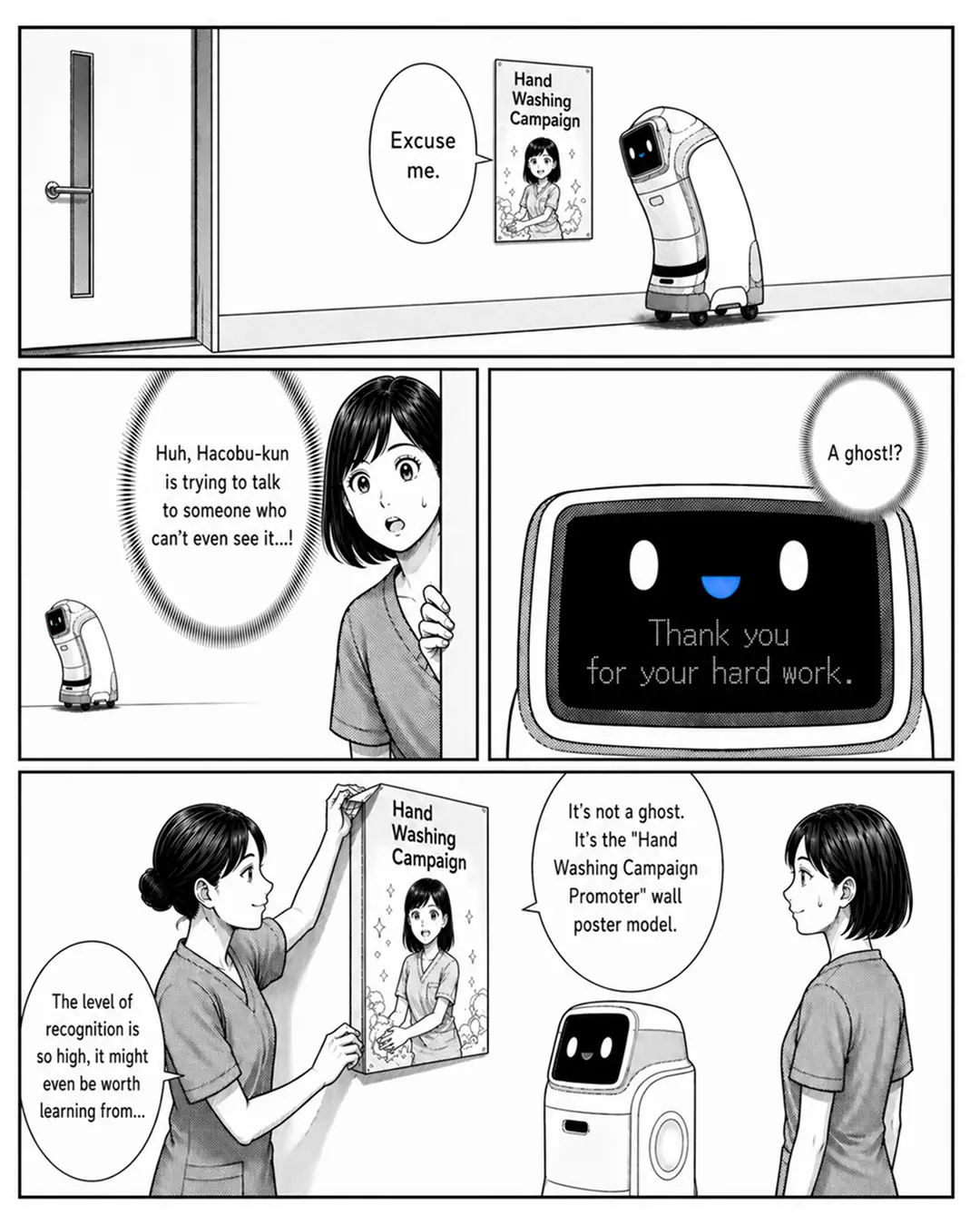
■ An AI that sees too well has no context. Image recognition perceives "a picture on the wall" and "a person in front of you" as similar pixel patterns. Technically, Hakobukun is operating correctly — the internal logic is consistent. Yet what remains in the field is something no one designed: a machine bowing repeatedly to a poster.
■ Edge cases only reveal themselves in the field. We tend to call this a "bug," but there is no error in the code. Posters on walls, mirrors in corridors, stains on ceilings — these are conditions that never existed in the test environment. Problems that cannot even be raised during desk-based design reviews finally appear when the system meets reality.
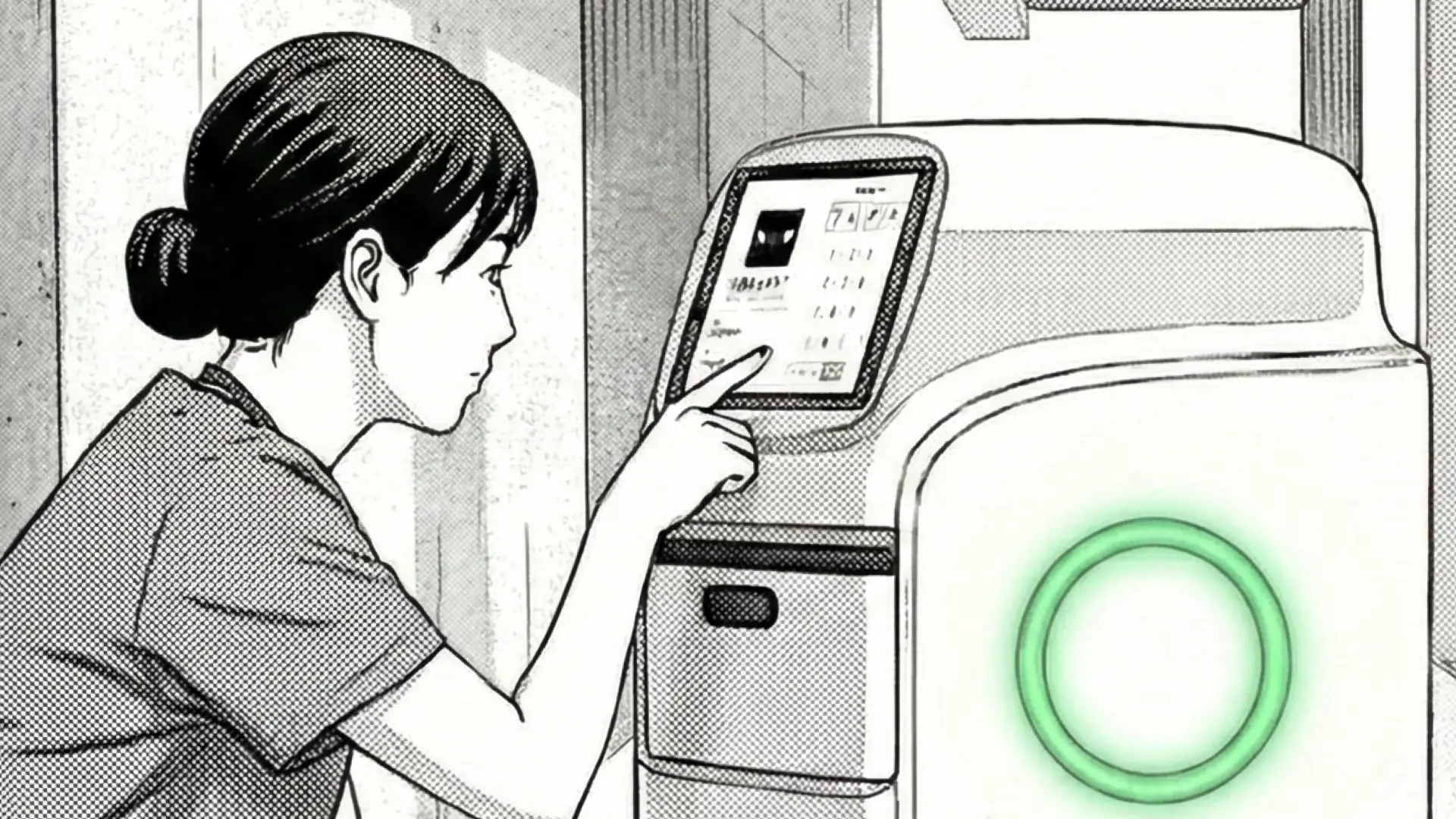
■ Conclusion: A bug report is a design review from the field. The new nurse's "A ghost?!", and the senior nurse adjusting the poster — only when these two come together does the edge case return to engineering as a reproducible phenomenon. What truly drives an AI product is this loop of observation and dialogue. Building a path that carries the field's "that's strange…" back to the engineers is how AI is grown into something genuinely useful.