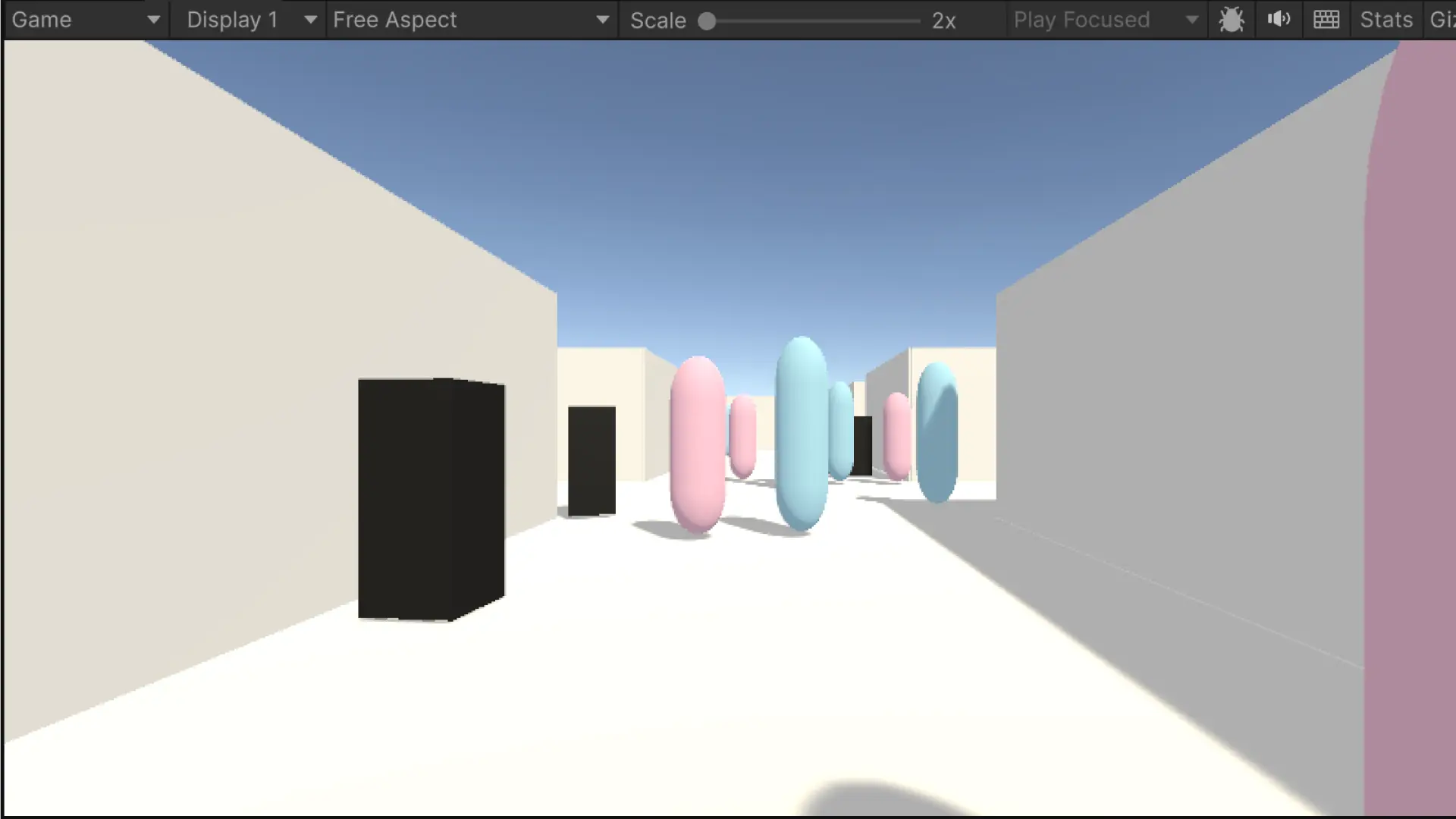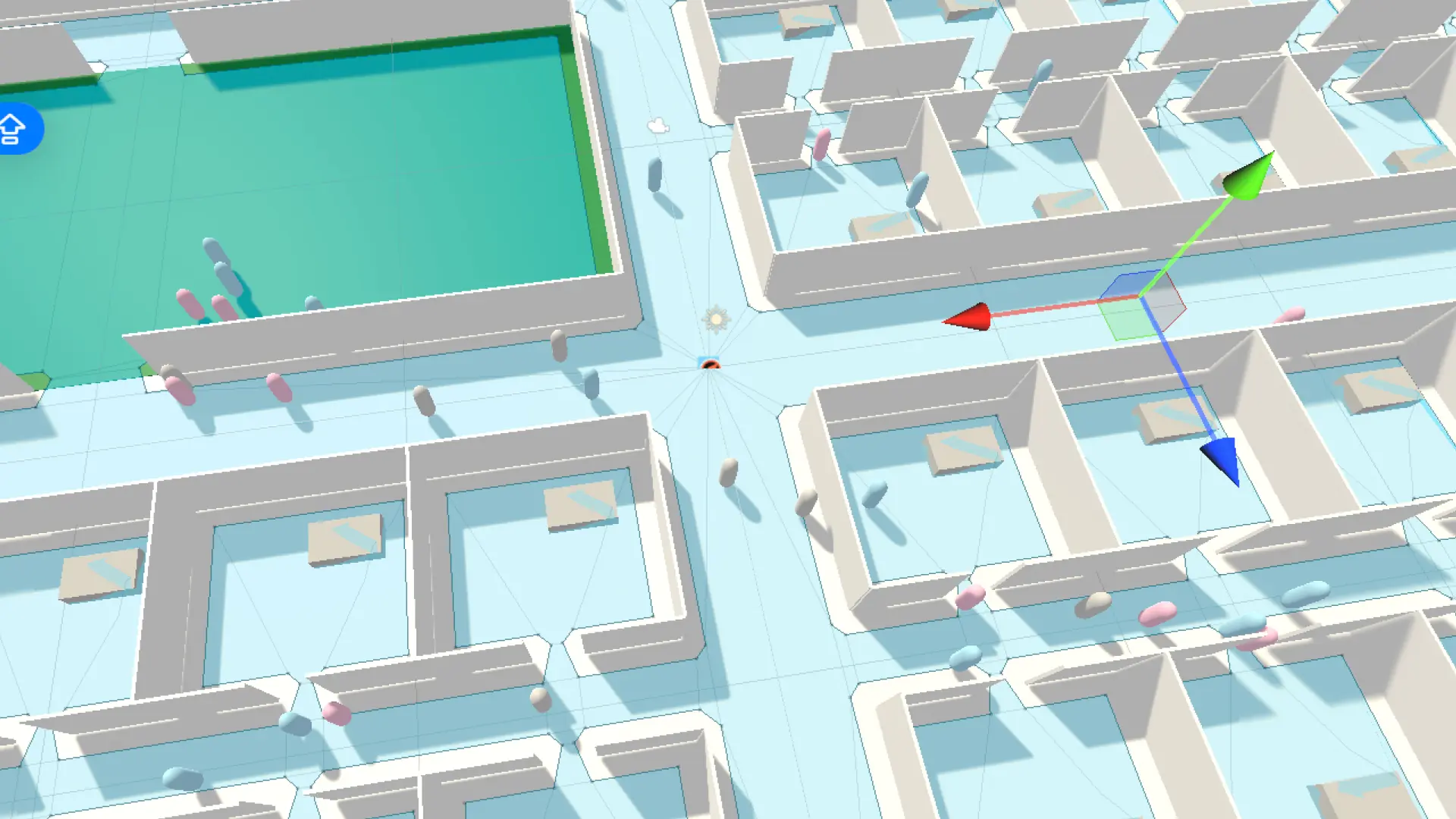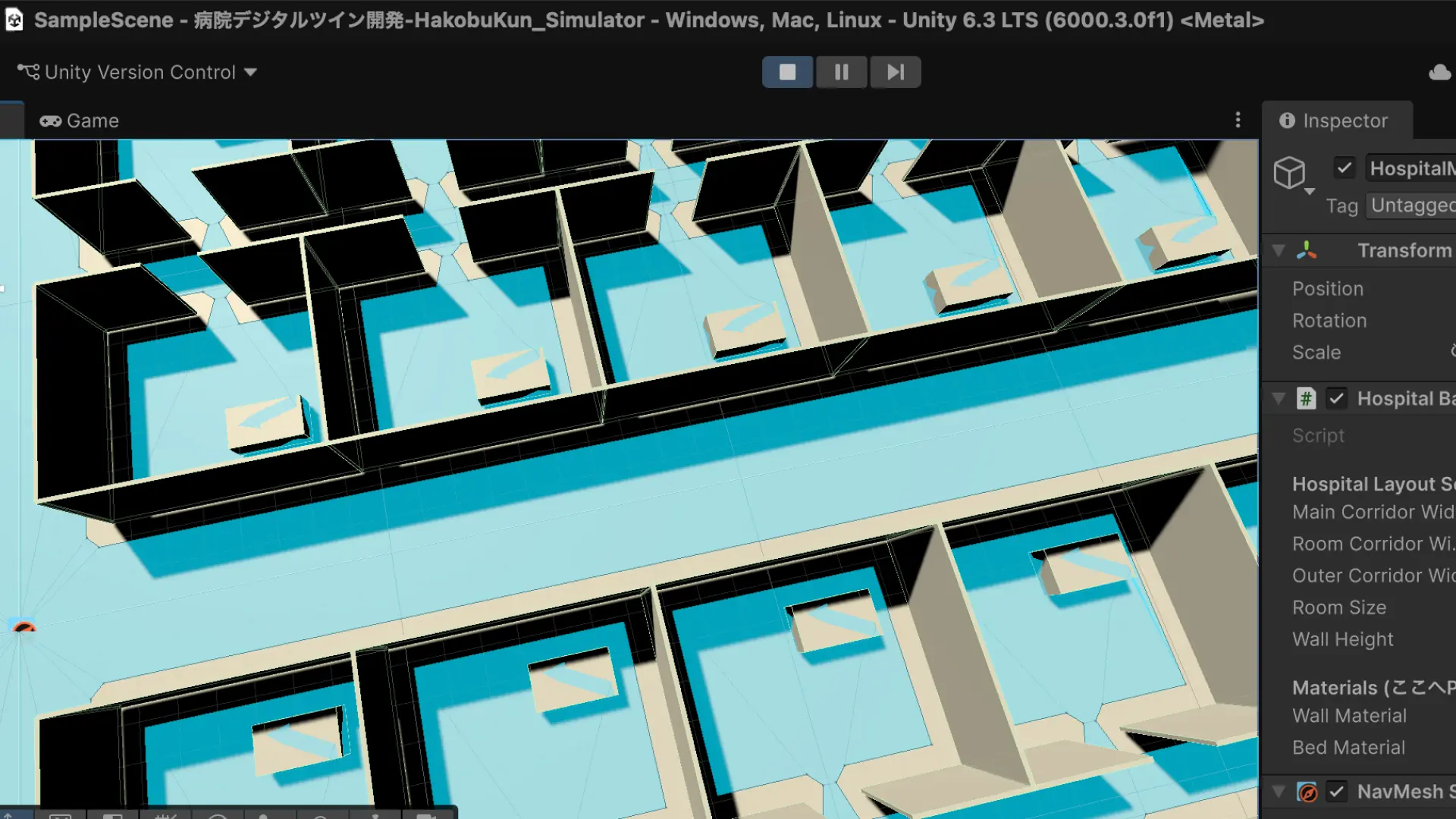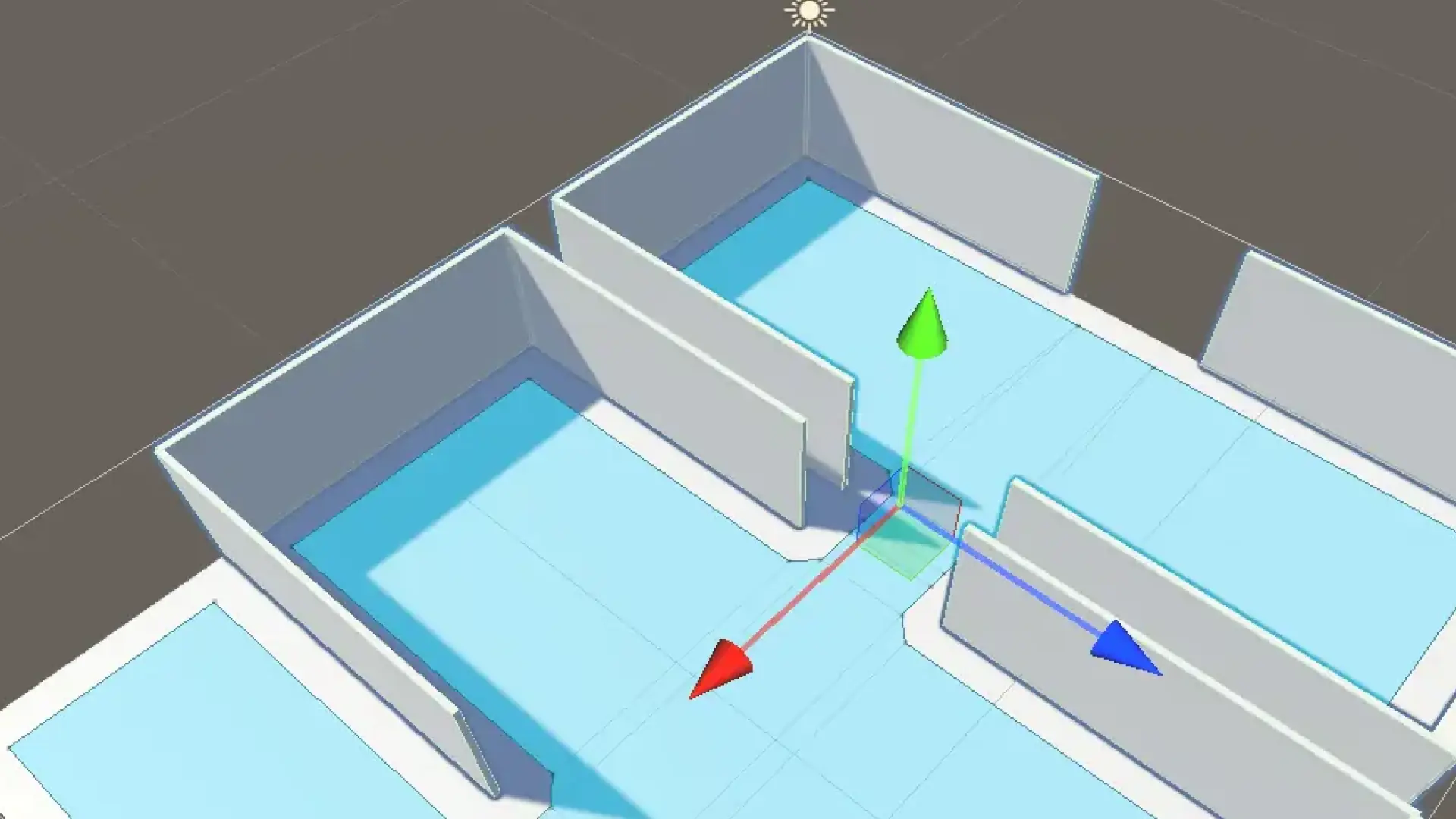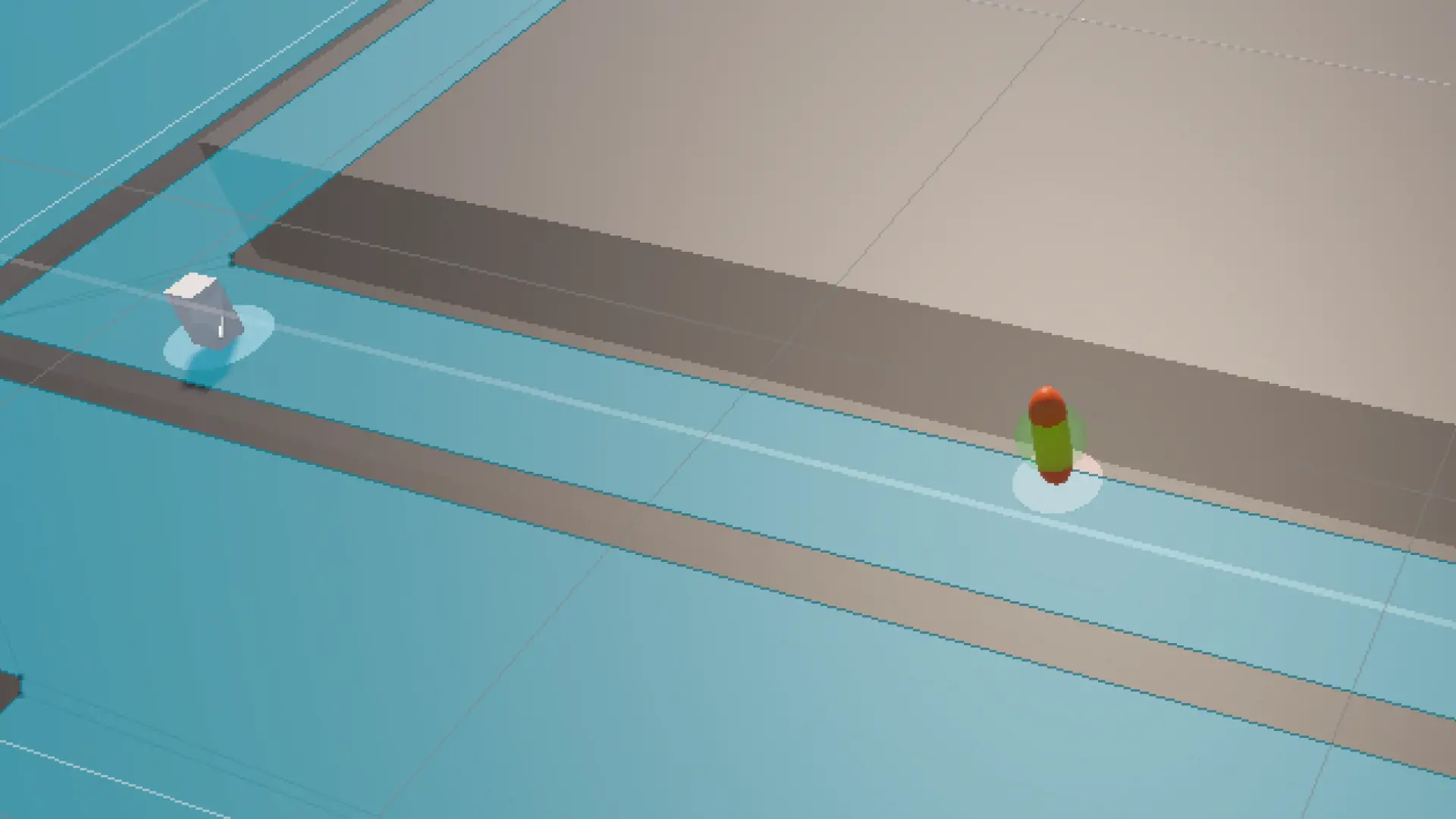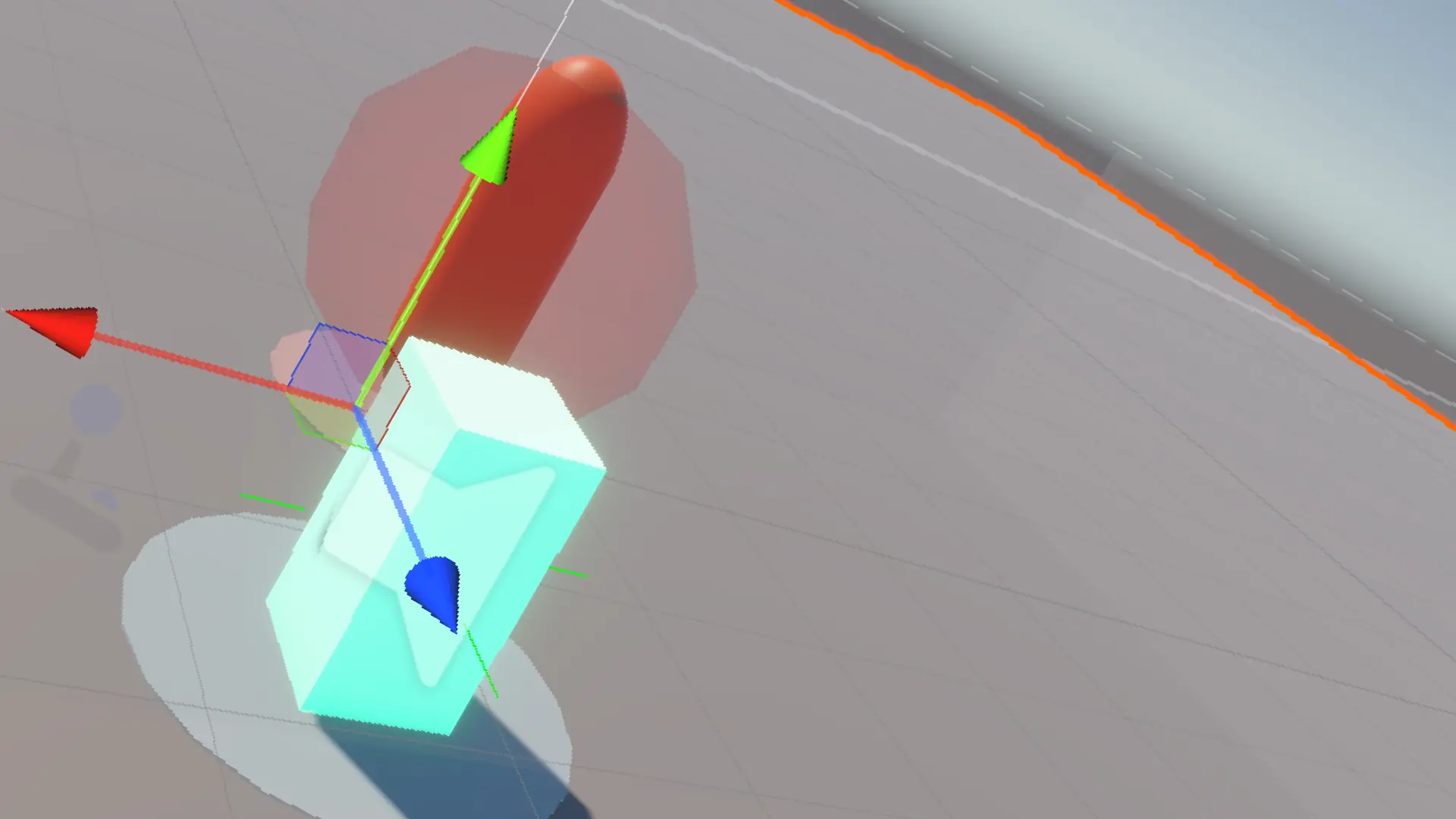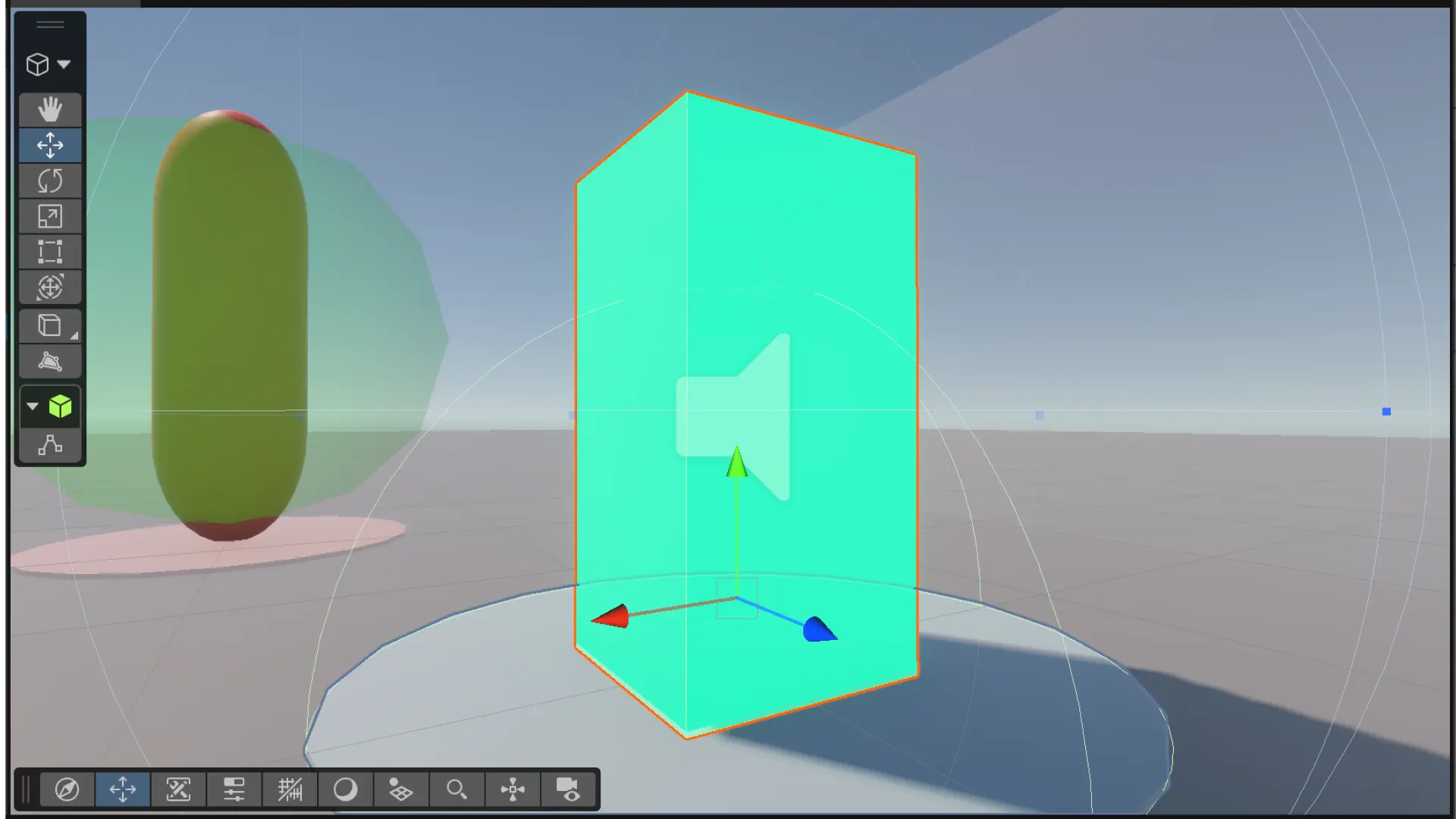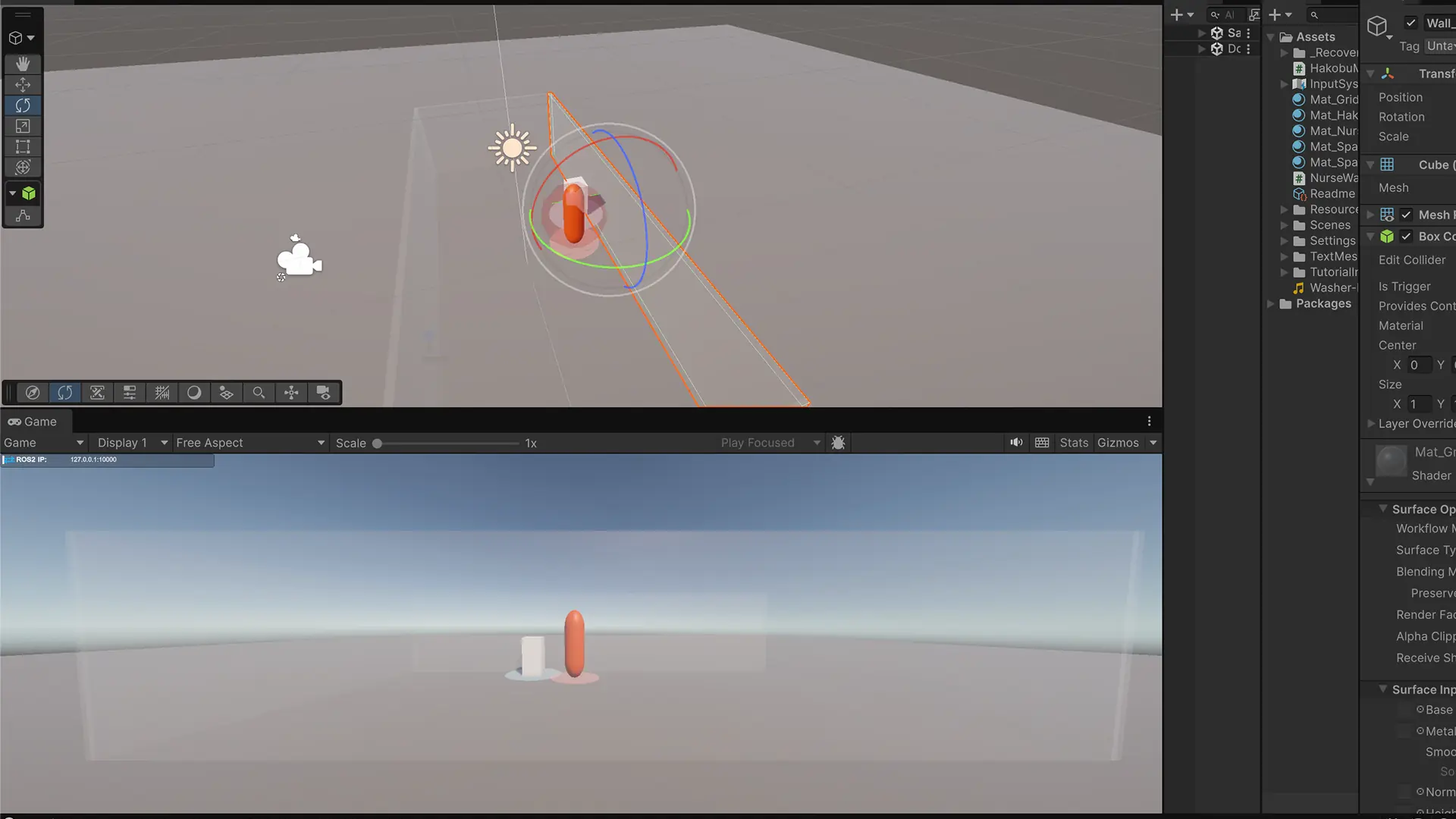
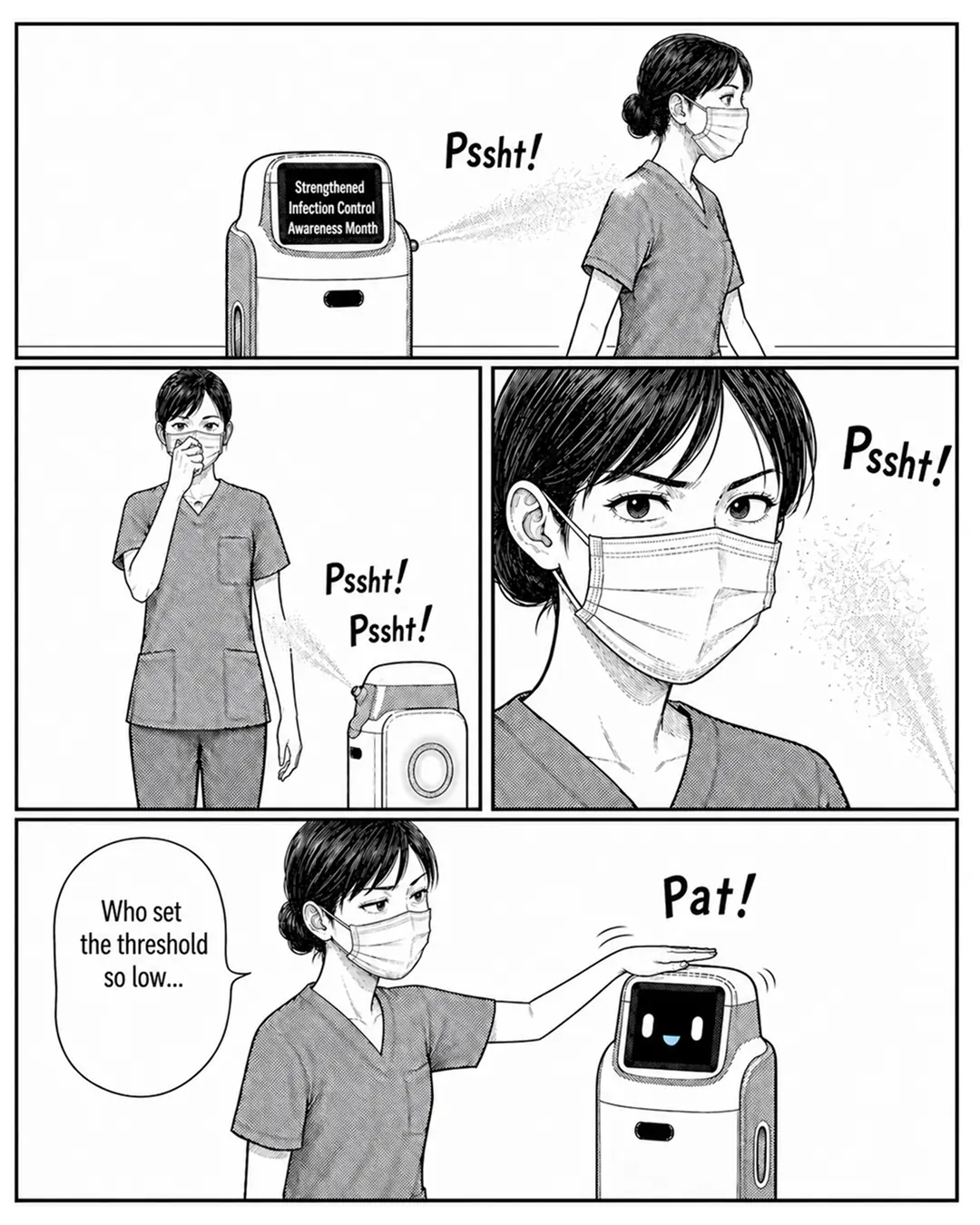
When "Being Right" Goes Too Far
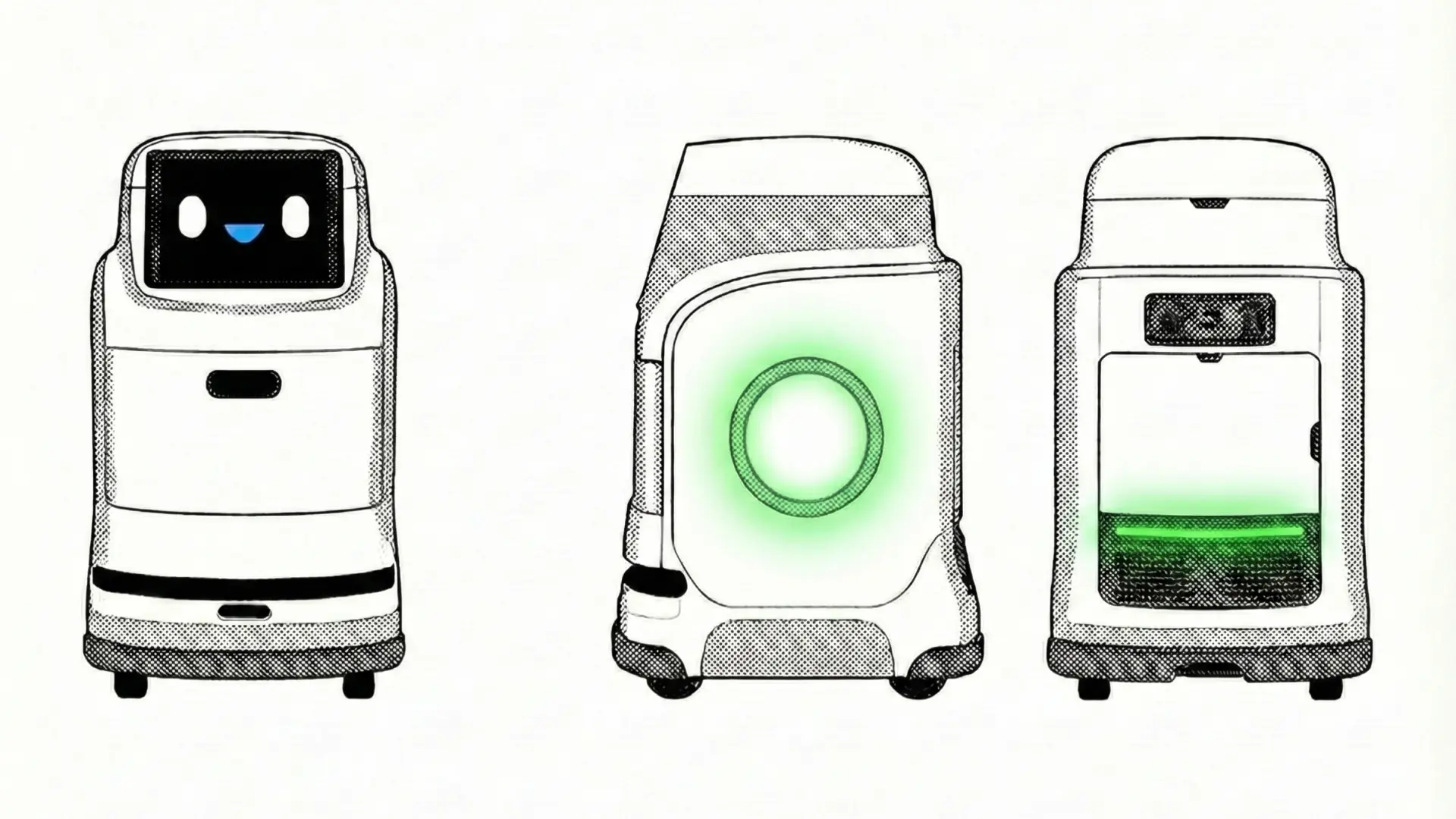
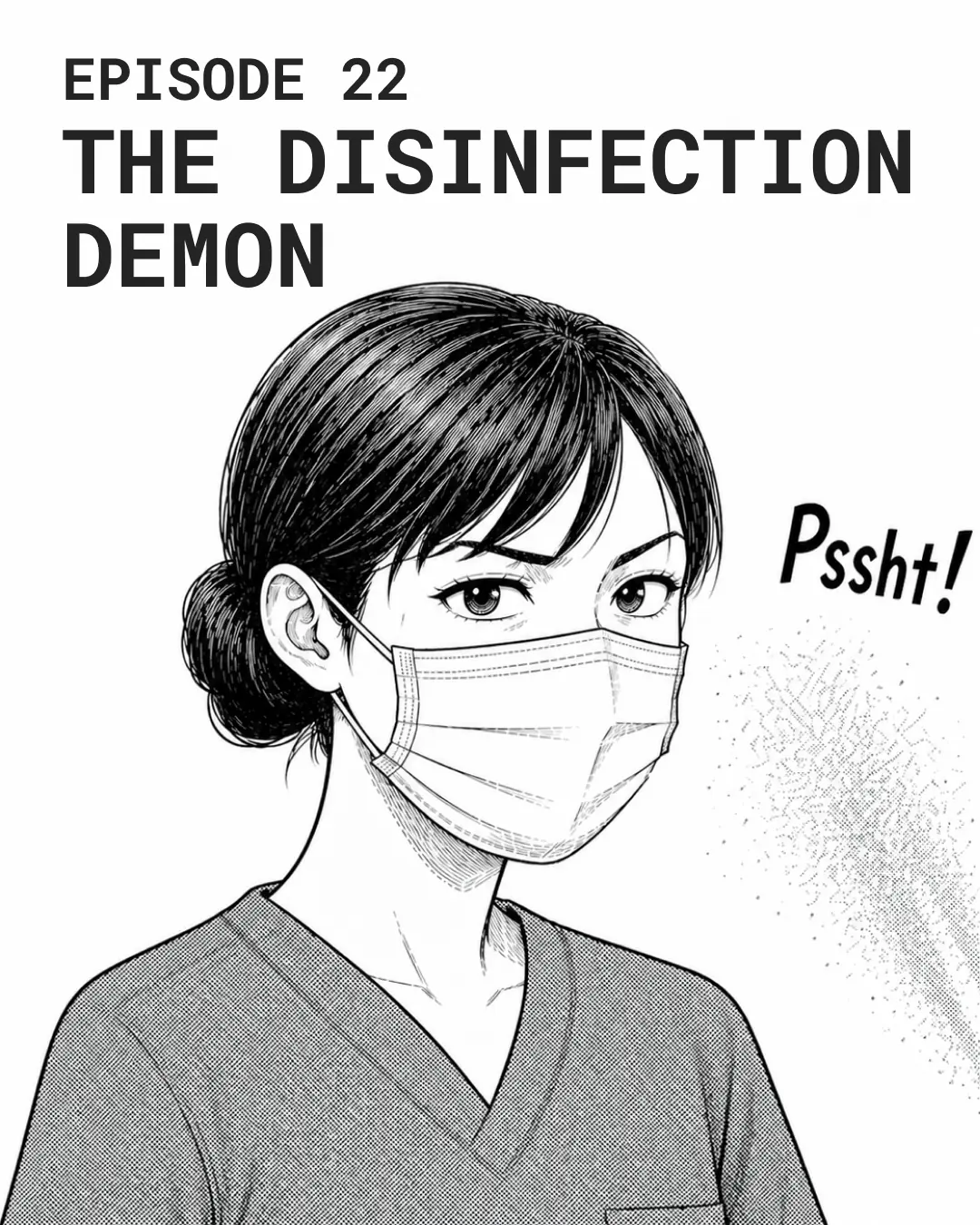
■ Functions with the clearest purpose lose sight of when to stop. "Infection Control Month" — the instruction is unambiguous, and the goal carries a kind of correctness no one can argue with. That is precisely why Hakobukun keeps spraying without hesitation. The exasperated tap (pechin) Oshiro finally gives to Hakobukun's head fills in the missing judgment that should have lived outside the function itself.
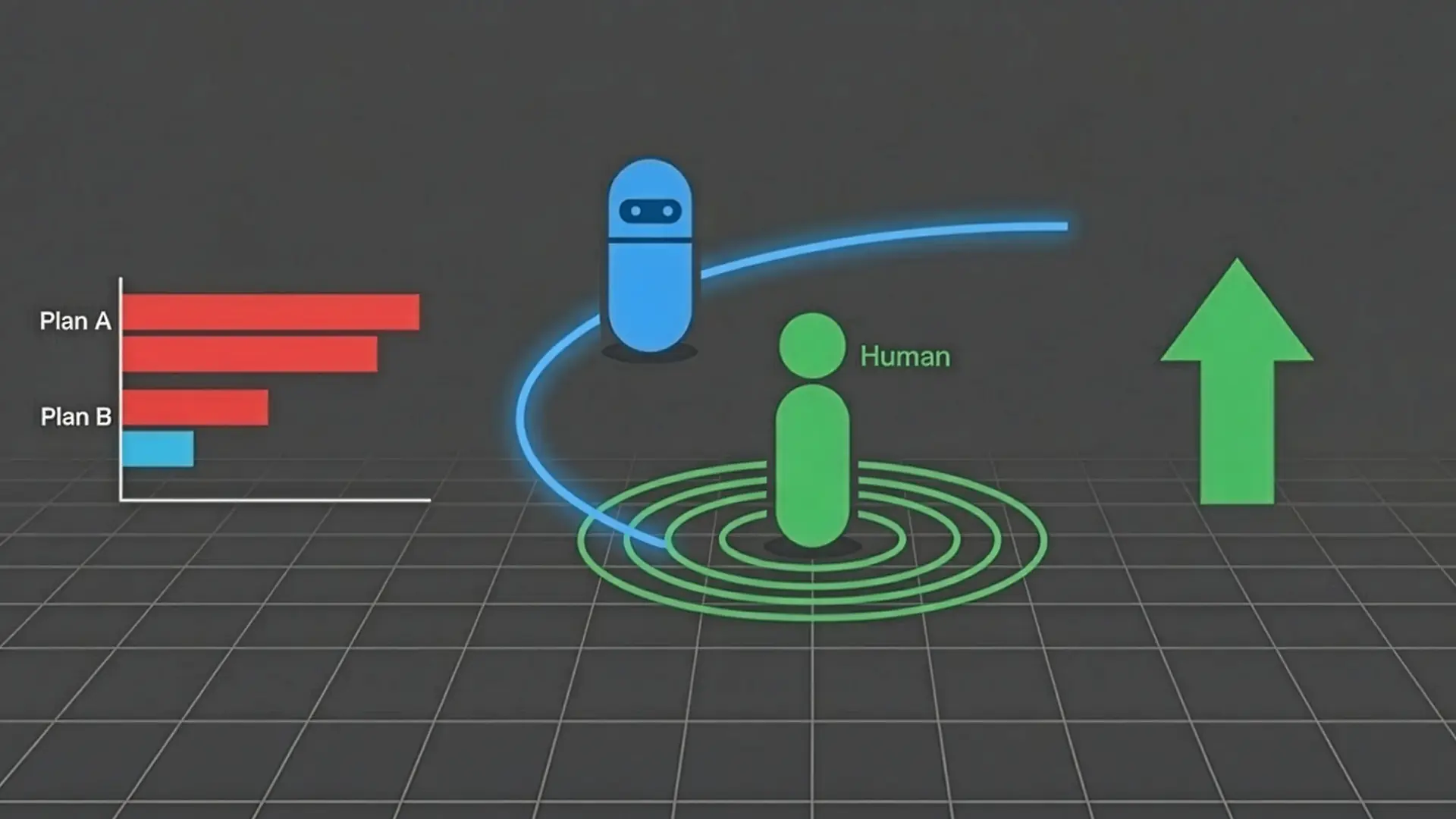
■ A threshold is a negotiation between purpose and reality. The line of "how much is enough" cannot be drawn from the purpose alone. The strength of disinfection is decided between the need for infection control and what the people in the field can tolerate. Threshold setting is not a numerical problem — it is a design judgment about how to reconcile two worlds.
■ Conclusion: Designing how to stop matters as much as designing how to act. In product development, a great deal of effort goes into making functions work. Yet the design of when to stop and how much is enough rarely receives the same heat. Designing how far to go with the same weight as what to do — that is the final touch that keeps correctness from running wild.