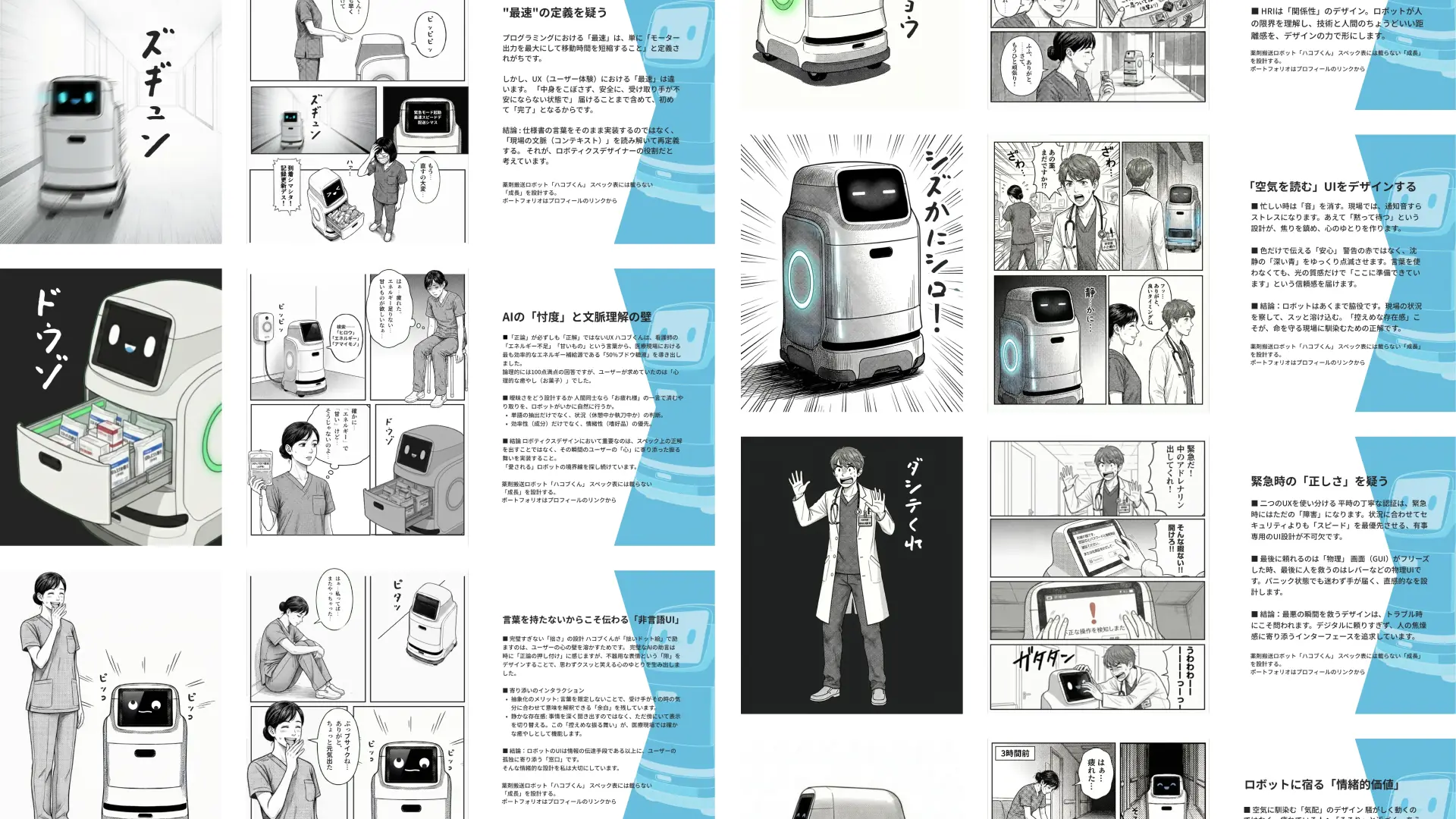
The Design That Returns "Emotion"
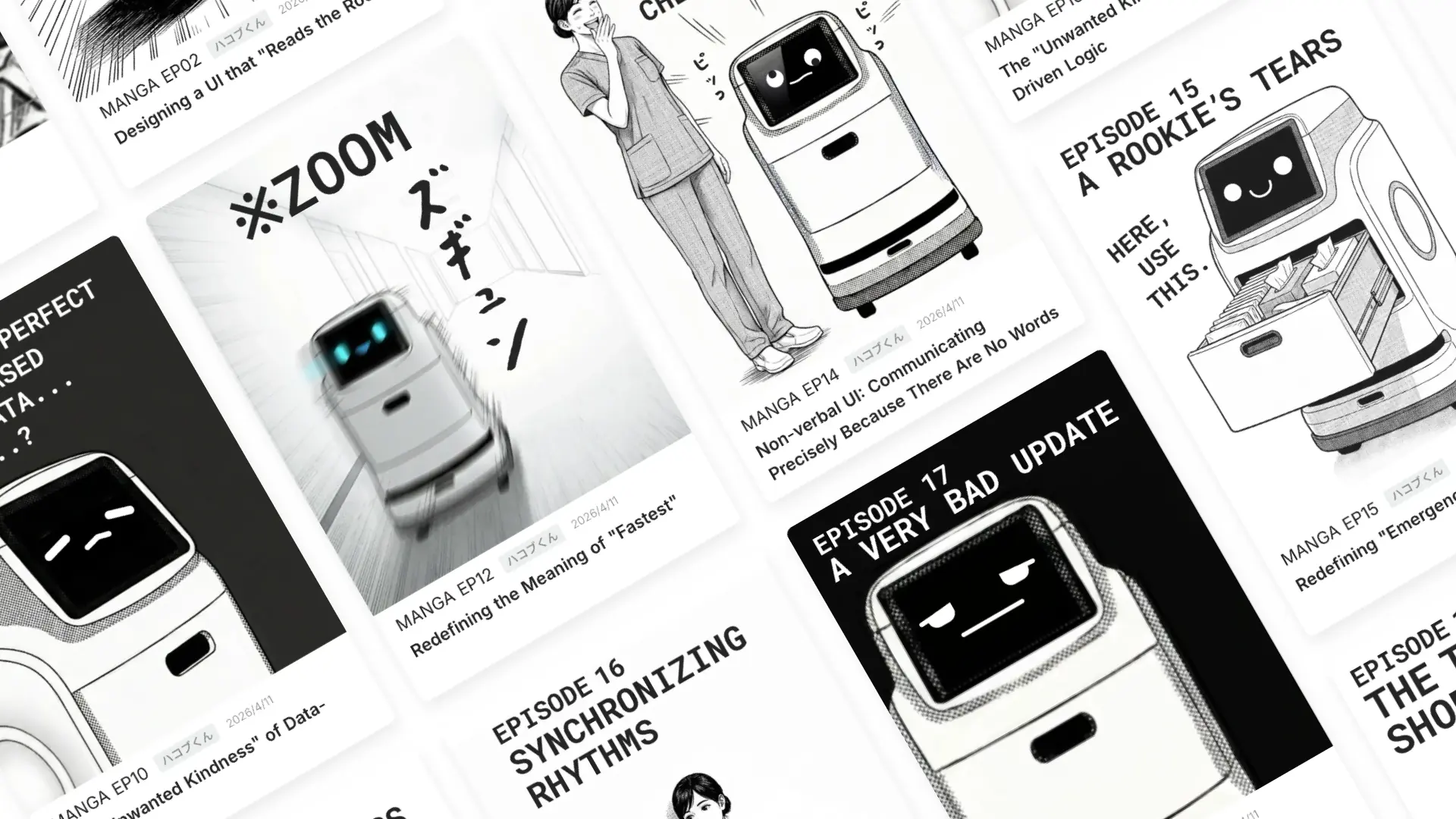
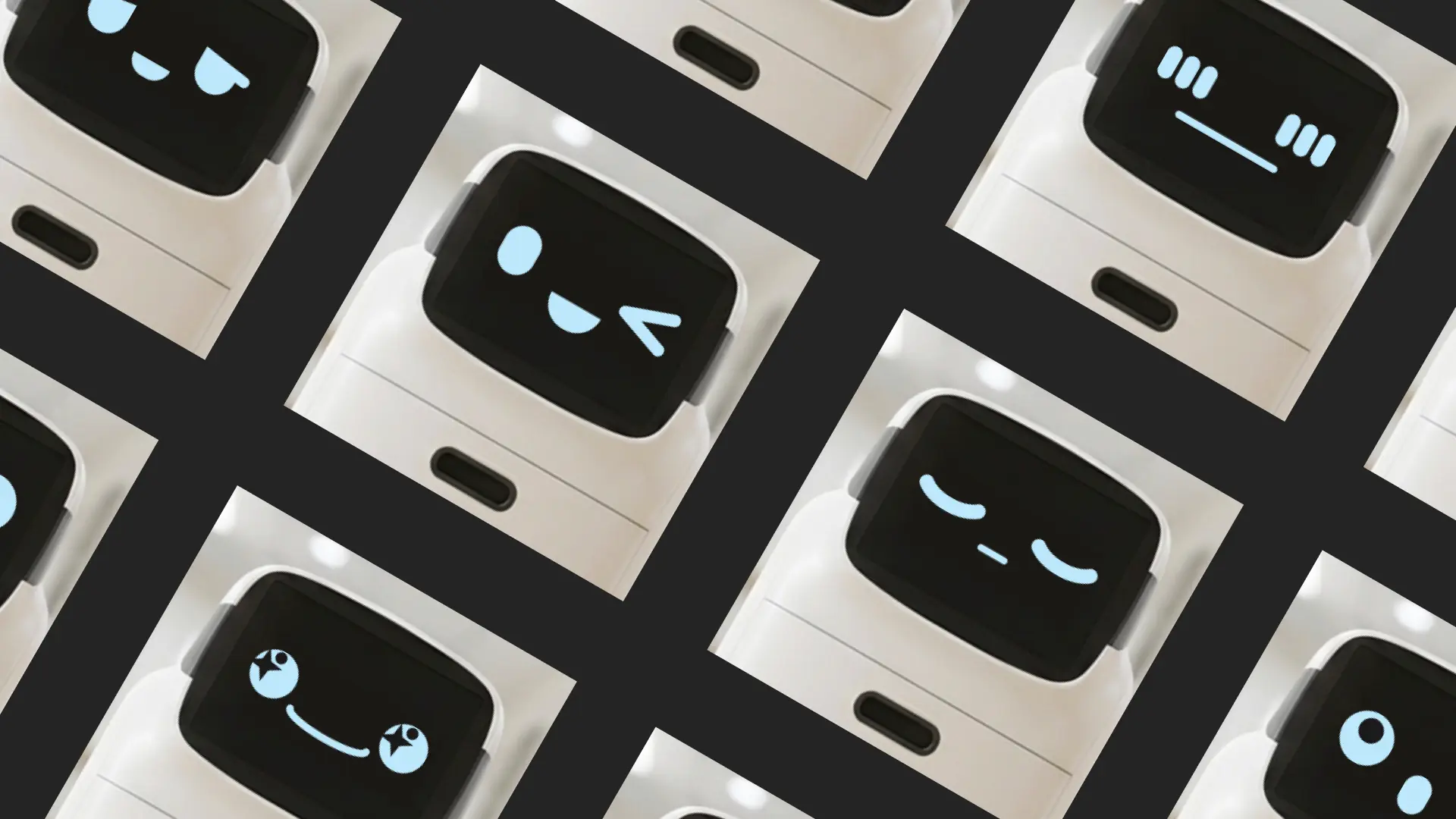
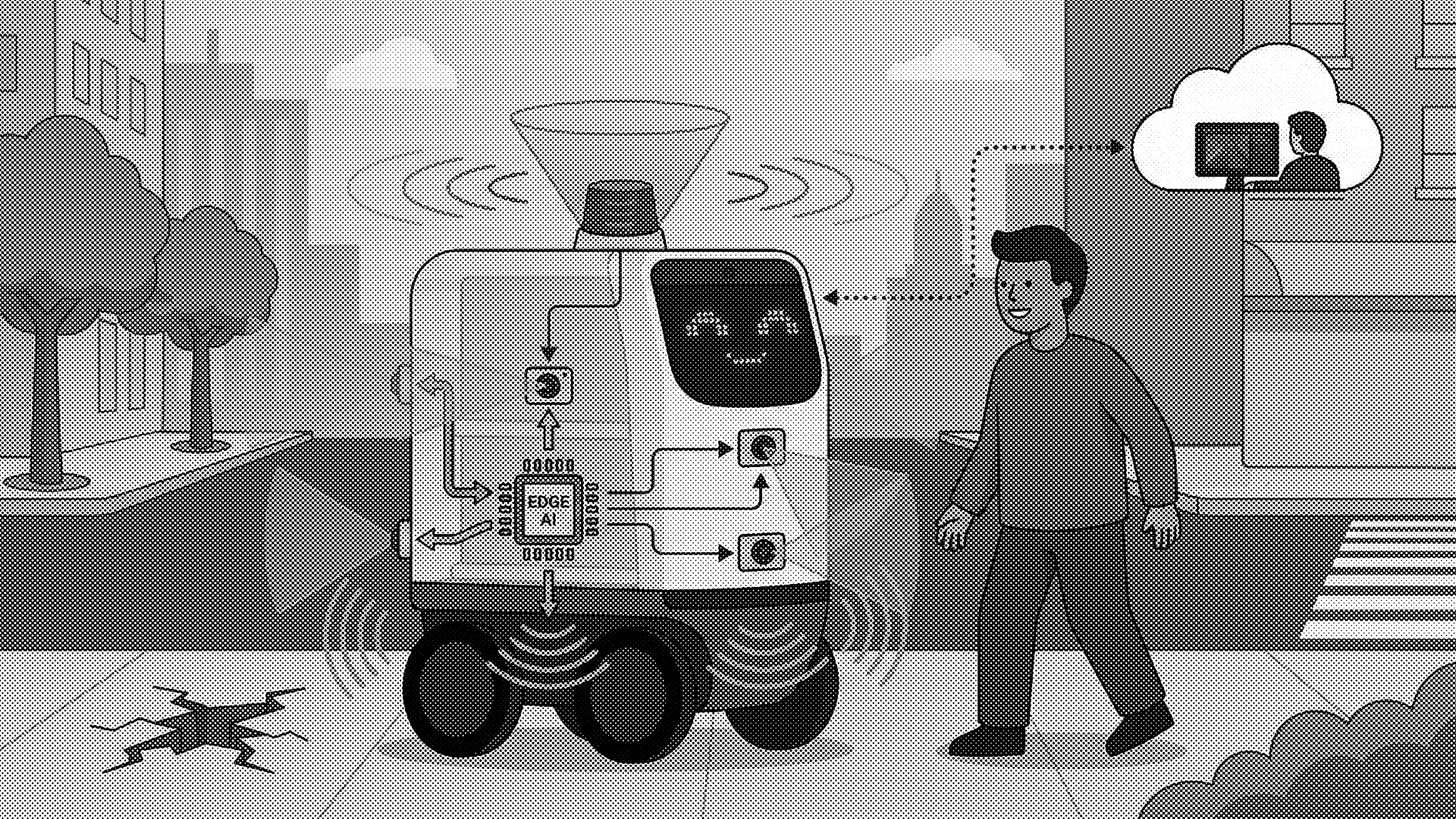
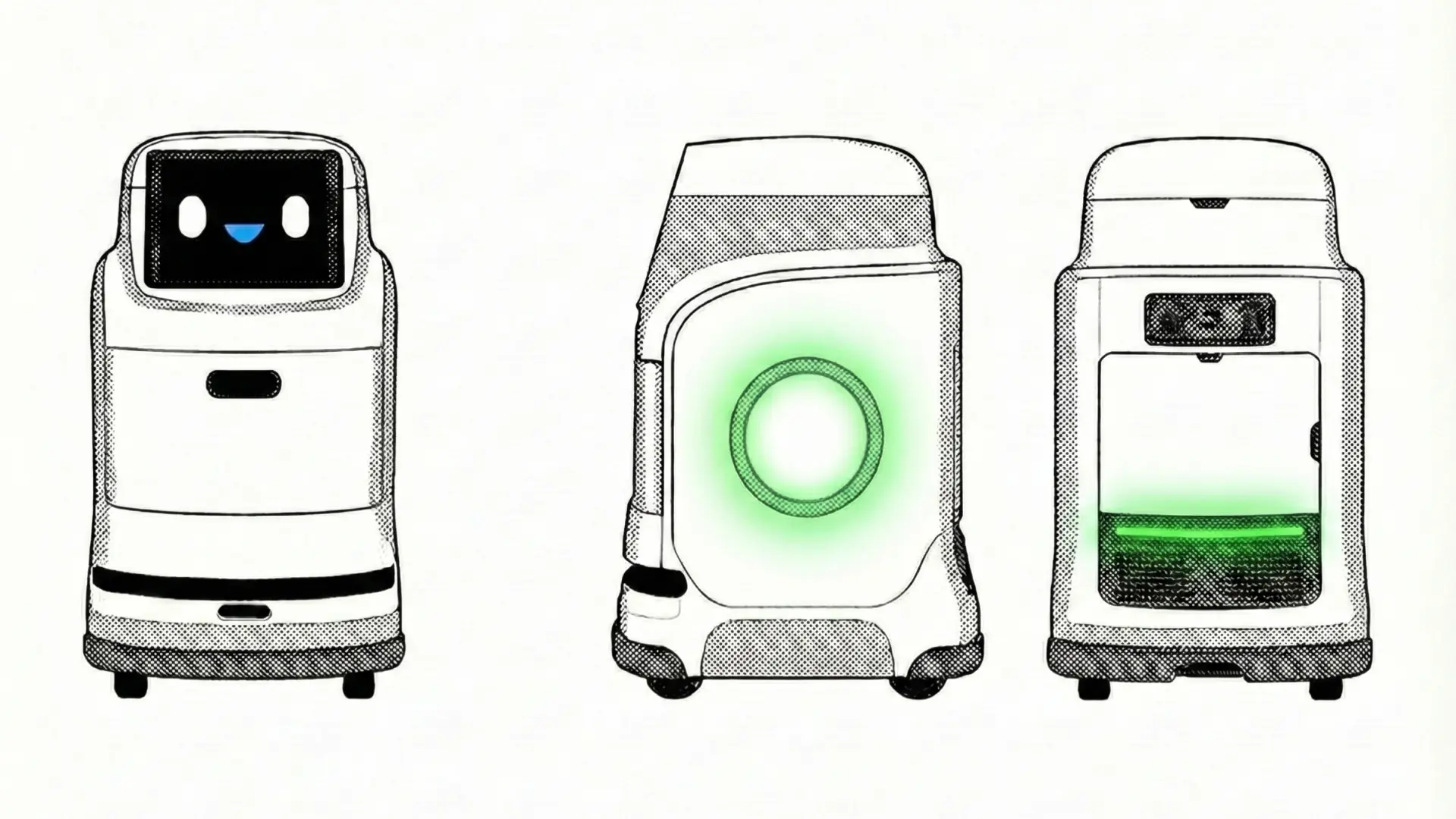
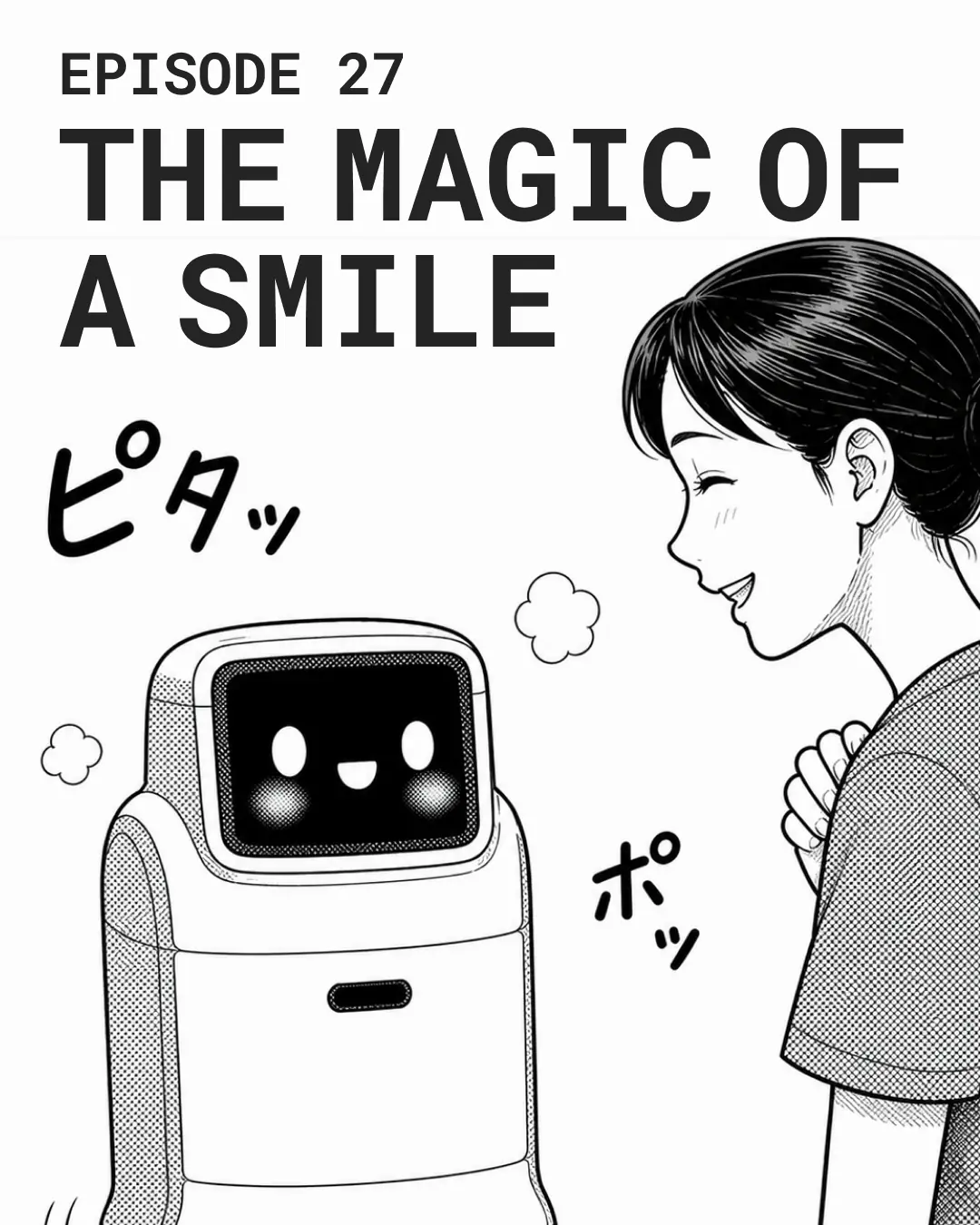
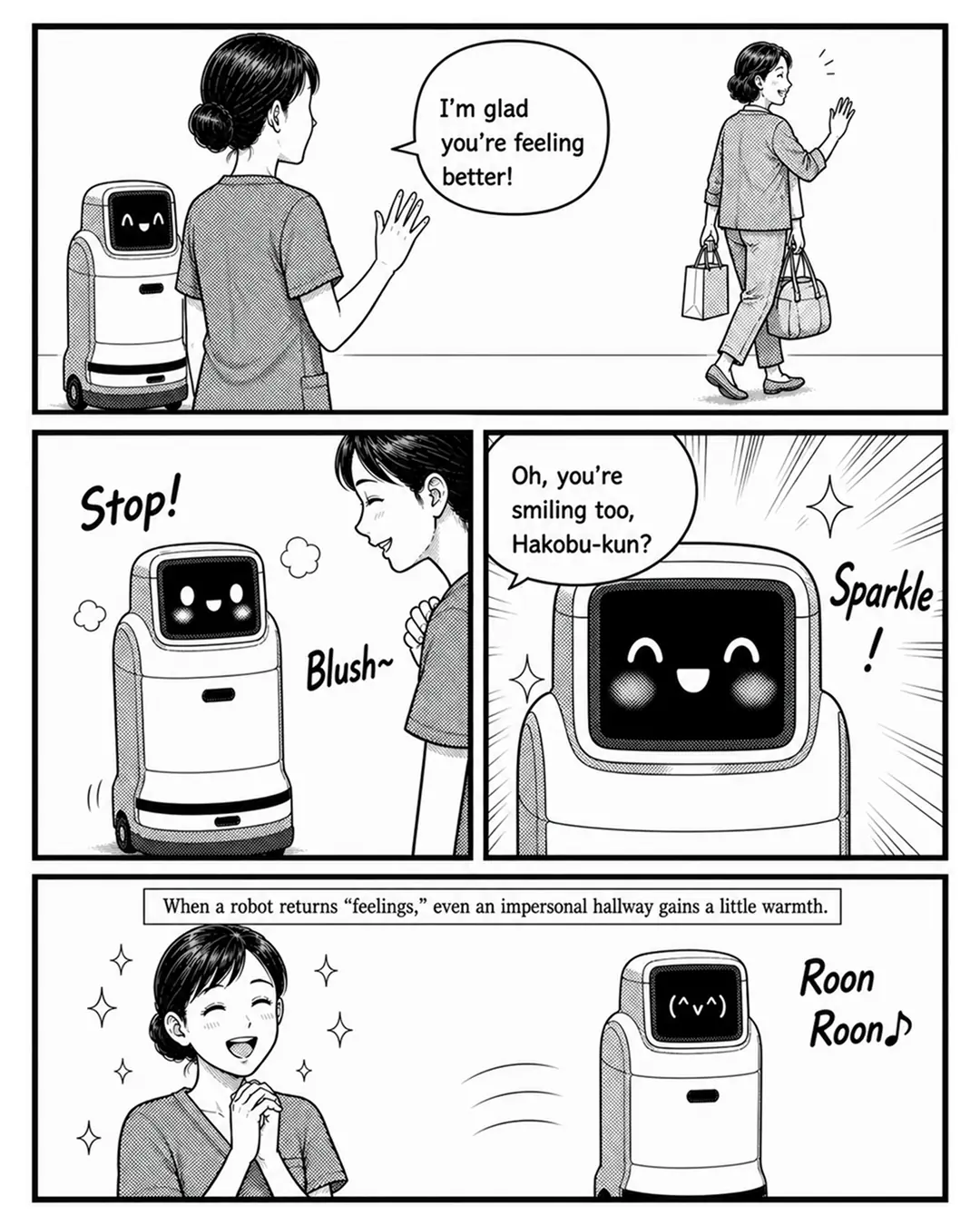
■ Expression faces outward, not inward The blush and sparkles on Hakobukun's display are not evidence of emerging feeling. Image recognition detected Oshiro Aina's smile and output a matching pattern. Yet it reads not as output, but as a response. Expression is not an internal state surfacing — it is a reflection of external context.
■ Feedback loops generate warmth Oshiro's smile → Hakobukun's blush → Oshiro's brighter smile. This loop creates temperature in a sterile corridor. Whether Hakobukun has feelings is beside the point. The fact that something comes back amplifies the human side. Smiling at a silent wall and smiling at a responsive screen are not the same act.
■ Conclusion: Expression is function, not decoration A blushing display looks like ornamental "personality." Remove it, and presence vanishes from the interaction. Expressive output belongs at the top of the spec sheet, not the bottom. Hakobukun need not have feelings. Returning them is enough.