Designing to Read the Brave Face
■ From "Functional Correctness" to "Relational Correctness"
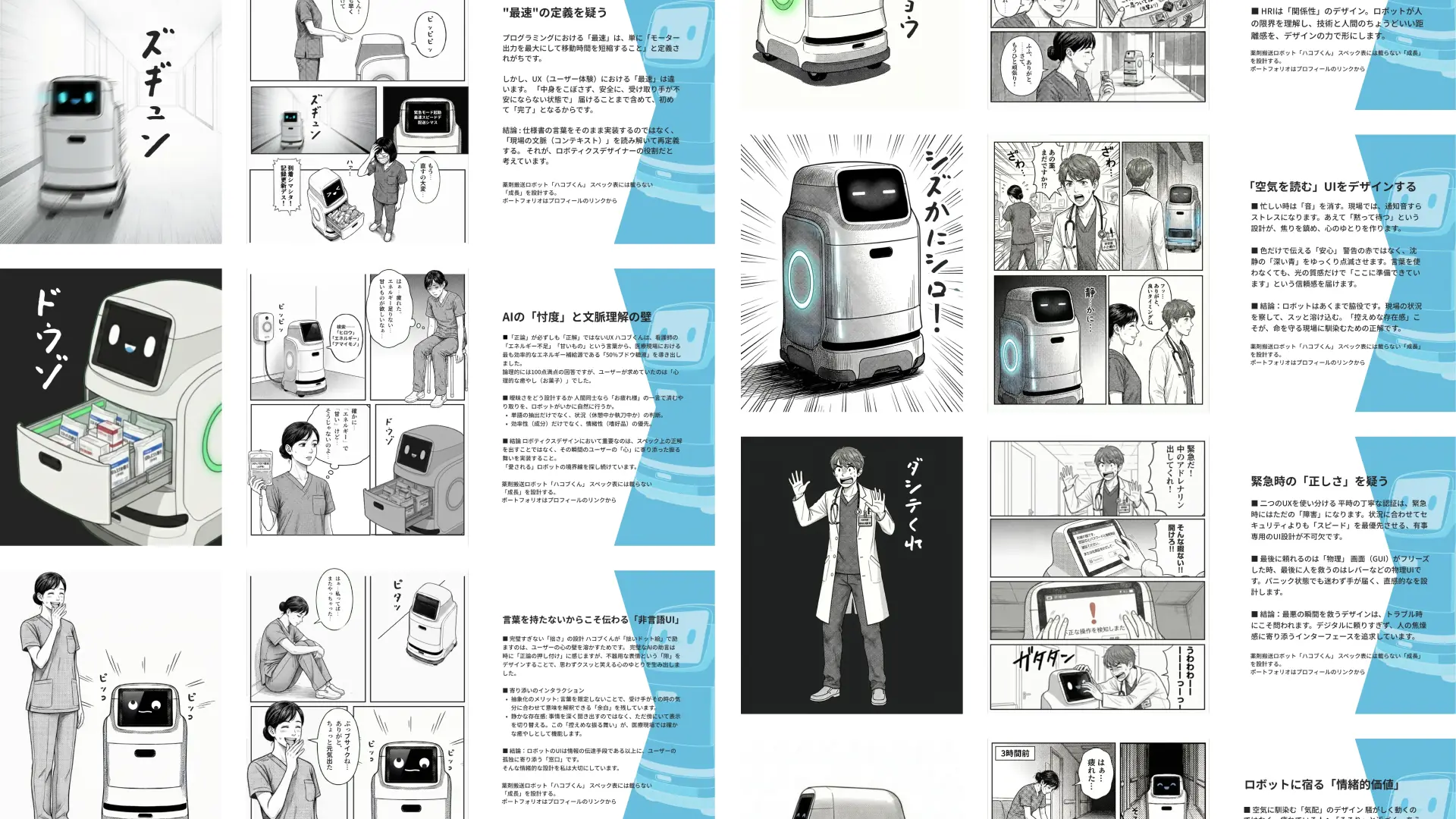
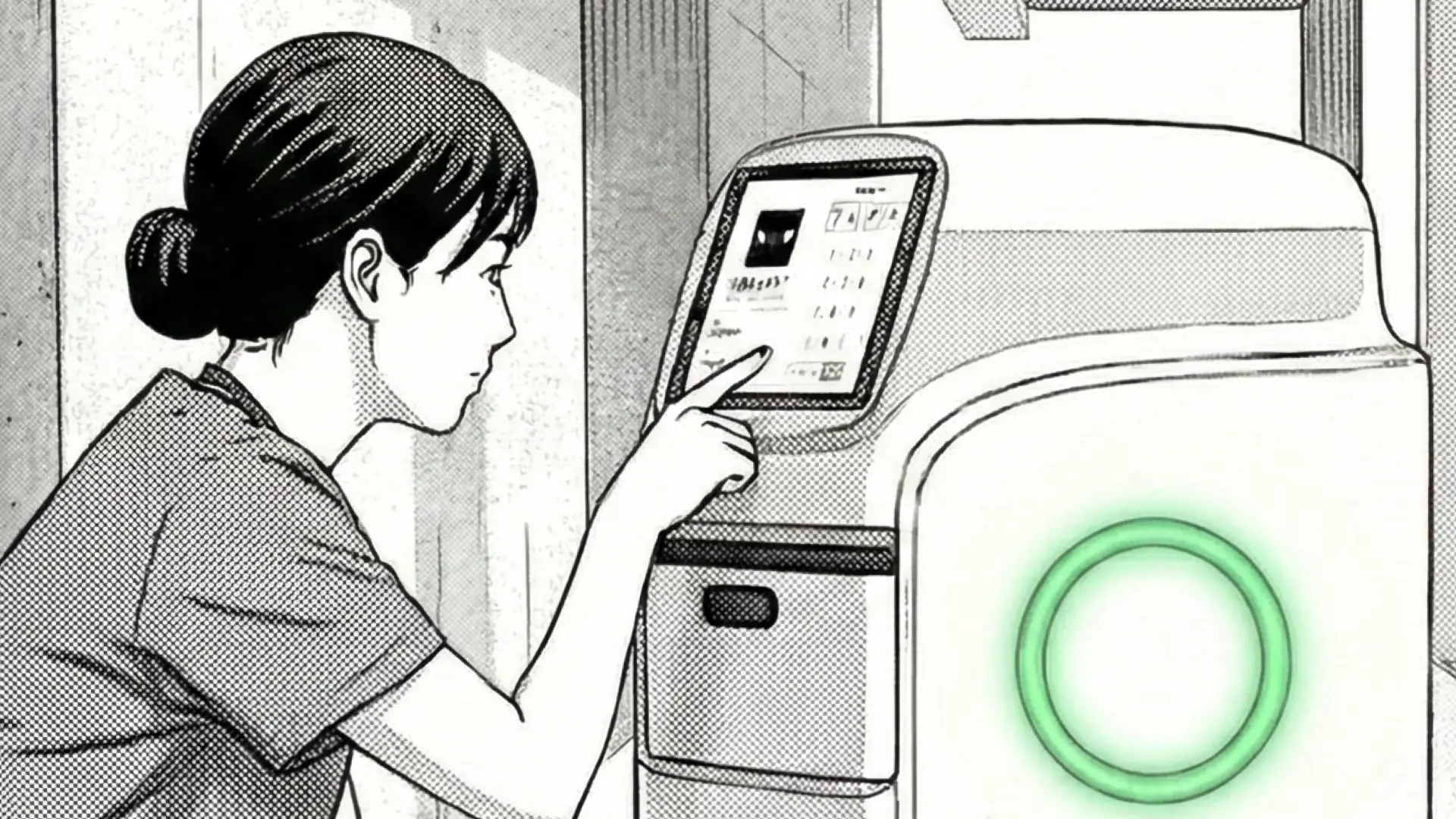
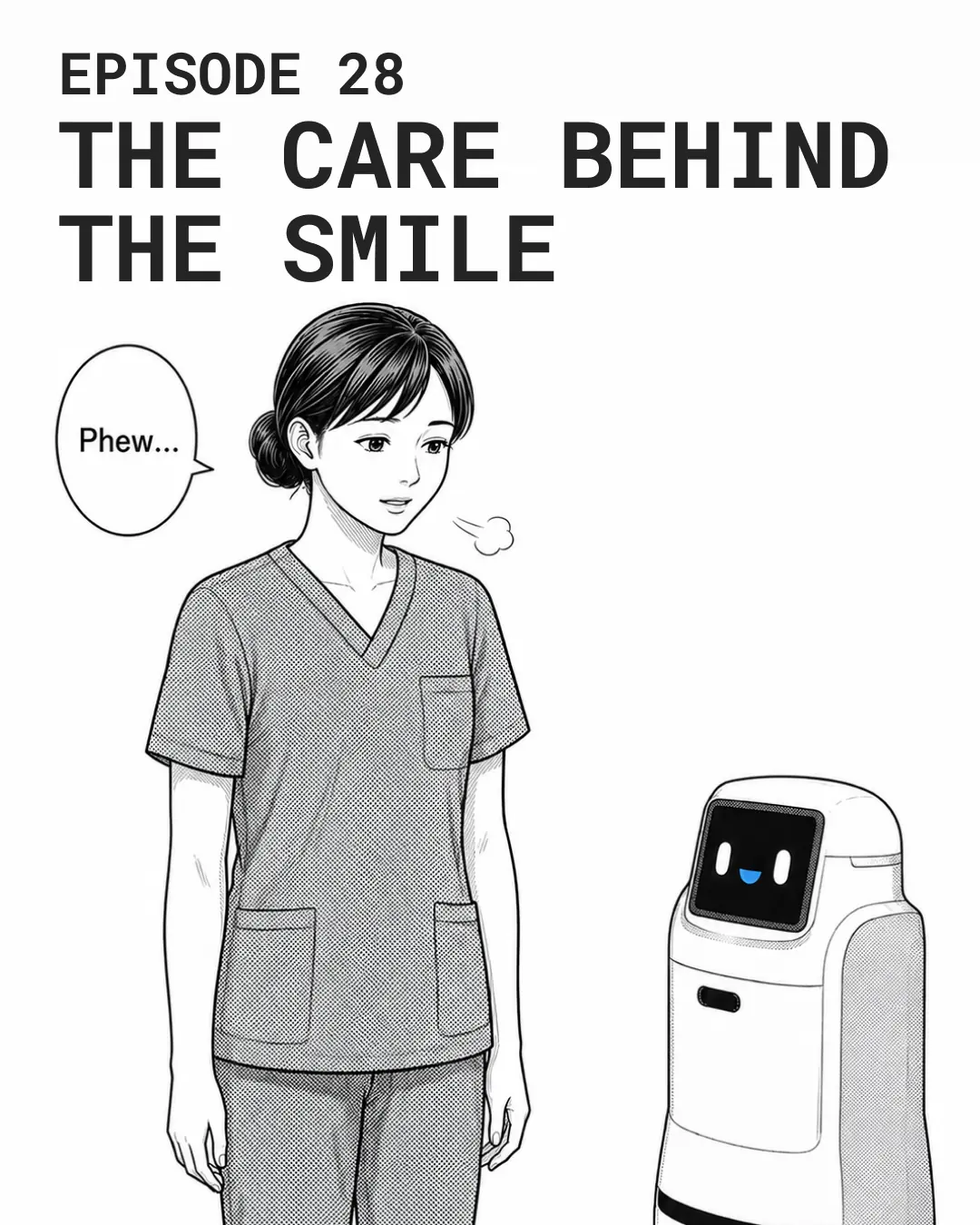
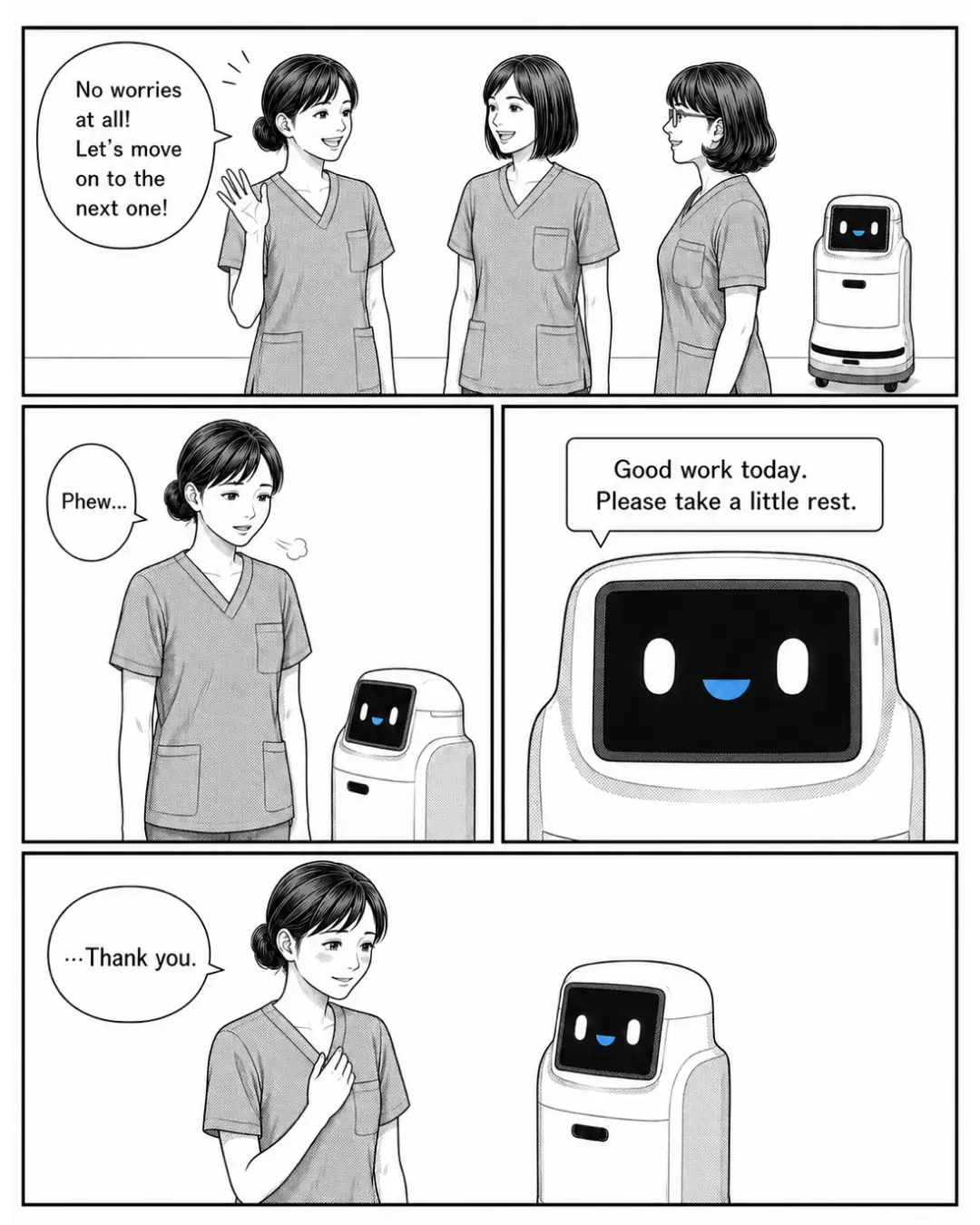
Robots normally take human words at face value. In Panel 1, Oshiro's bright "I'm totally fine!" is a social front. A robot optimizing purely for task throughput would have hurried her straight to the next delivery. But the small sigh once her colleagues had gone — "fuu…" — is the real signal. What a robot needs here is relational resolution: the ability to sense the truth beneath the front by reading the gap in context.
■ The "Warmth" of On-Screen Text
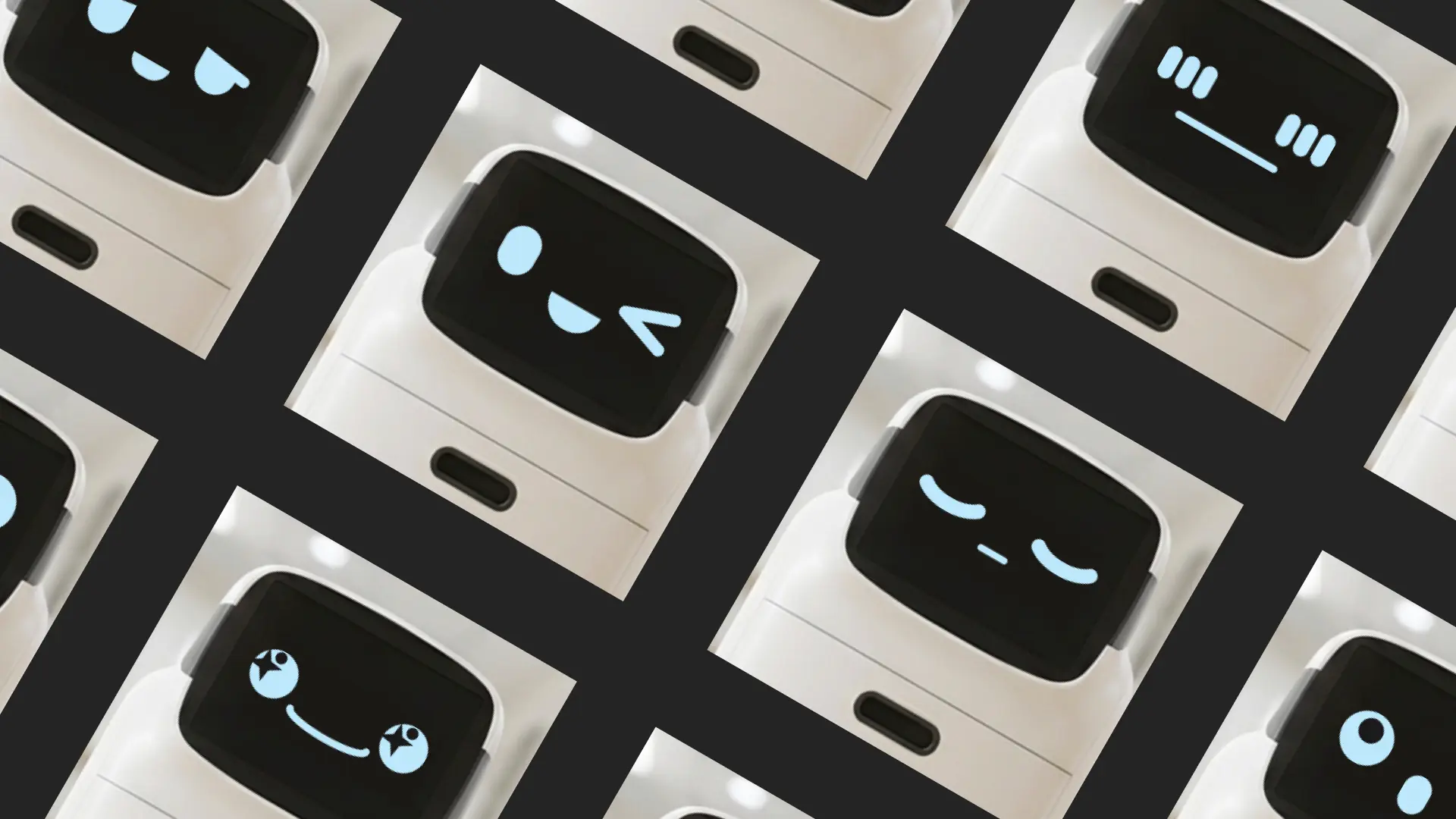
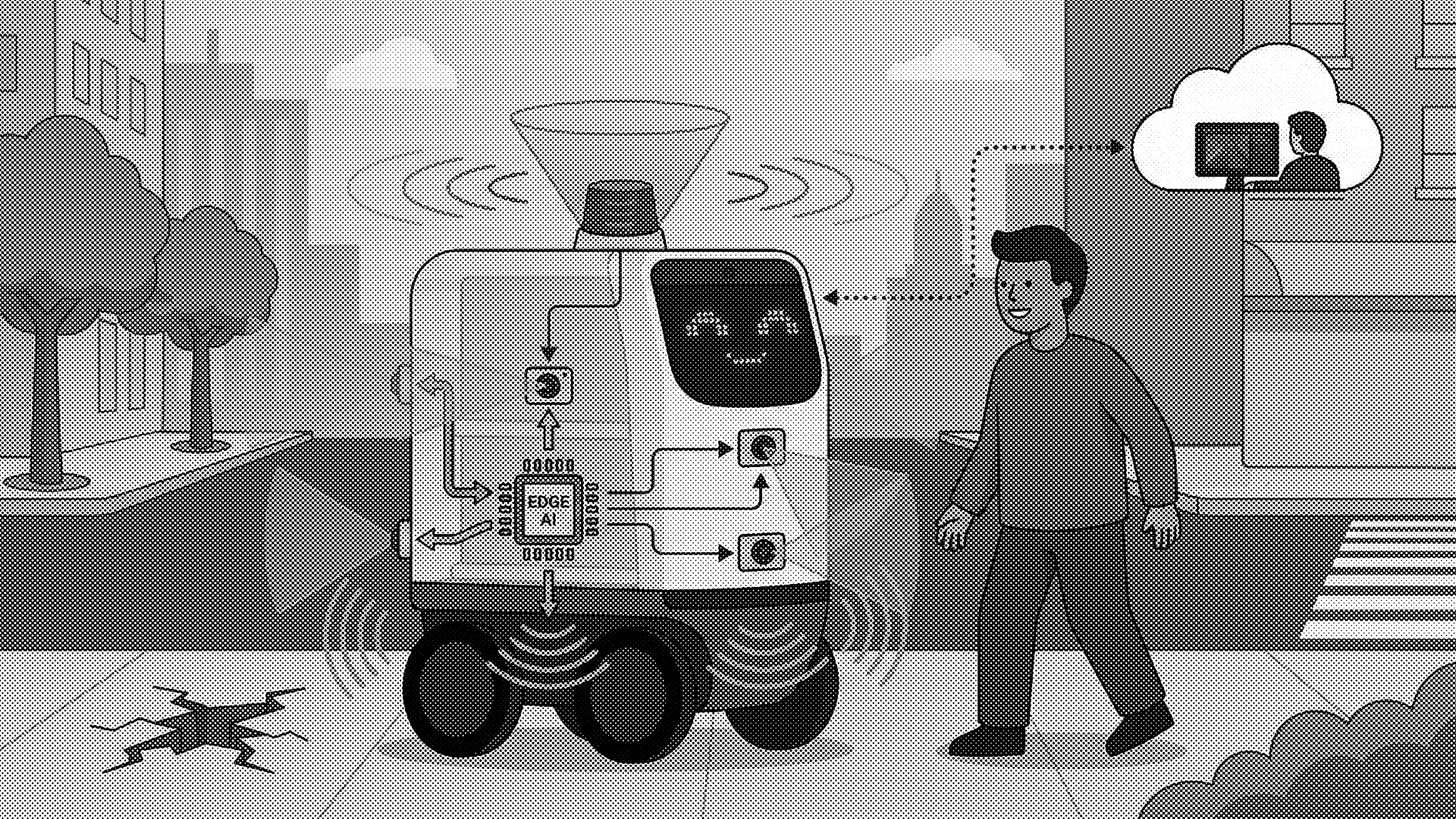
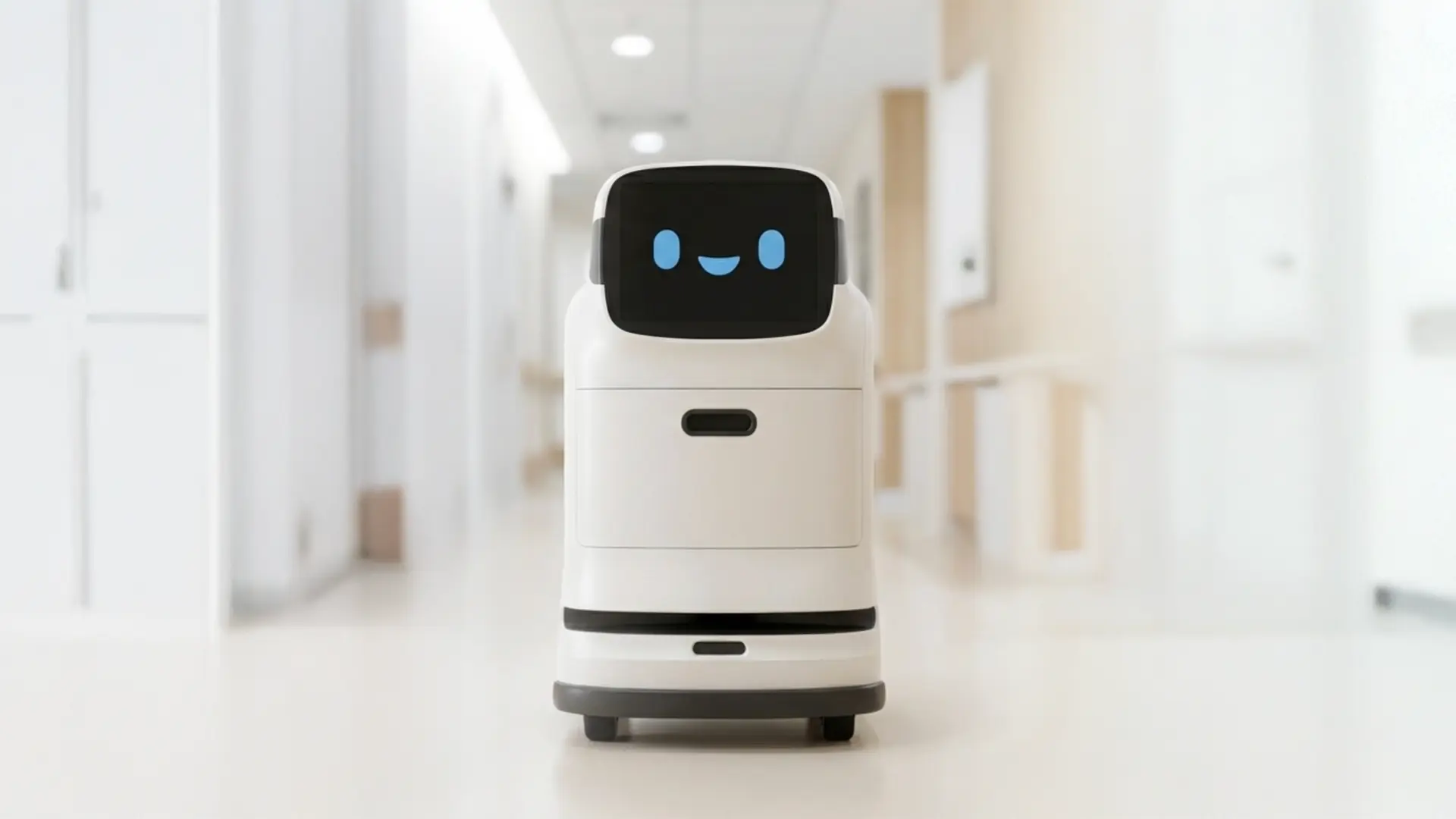
Hakobukun's quiet display — "Please rest a little" — does not broadcast like a voice. It is shown to one person only. This rests on a deliberate, delicate HRI choice. By dropping voice — the "audio as spatial noise" risk drawn in Episode 7 — and committing to the screen, Hakobukun reaches Oshiro's heart without intruding on her personal space.
■ Conclusion: From Tool to Partner on the Floor
Oshiro's "…thank you" marks the moment Hakobukun shifts from a mere delivery machine into a caring presence on the team. This emotional approach — the part that lives outside efficiency and spec sheets — is what brings genuine reassurance to a tense medical floor. Designing the "margin" that no specification can capture is what lets a robot carry a quiet, inorganic warmth.