Designing a Stopping Point for Apology
■ When sincerity backfires
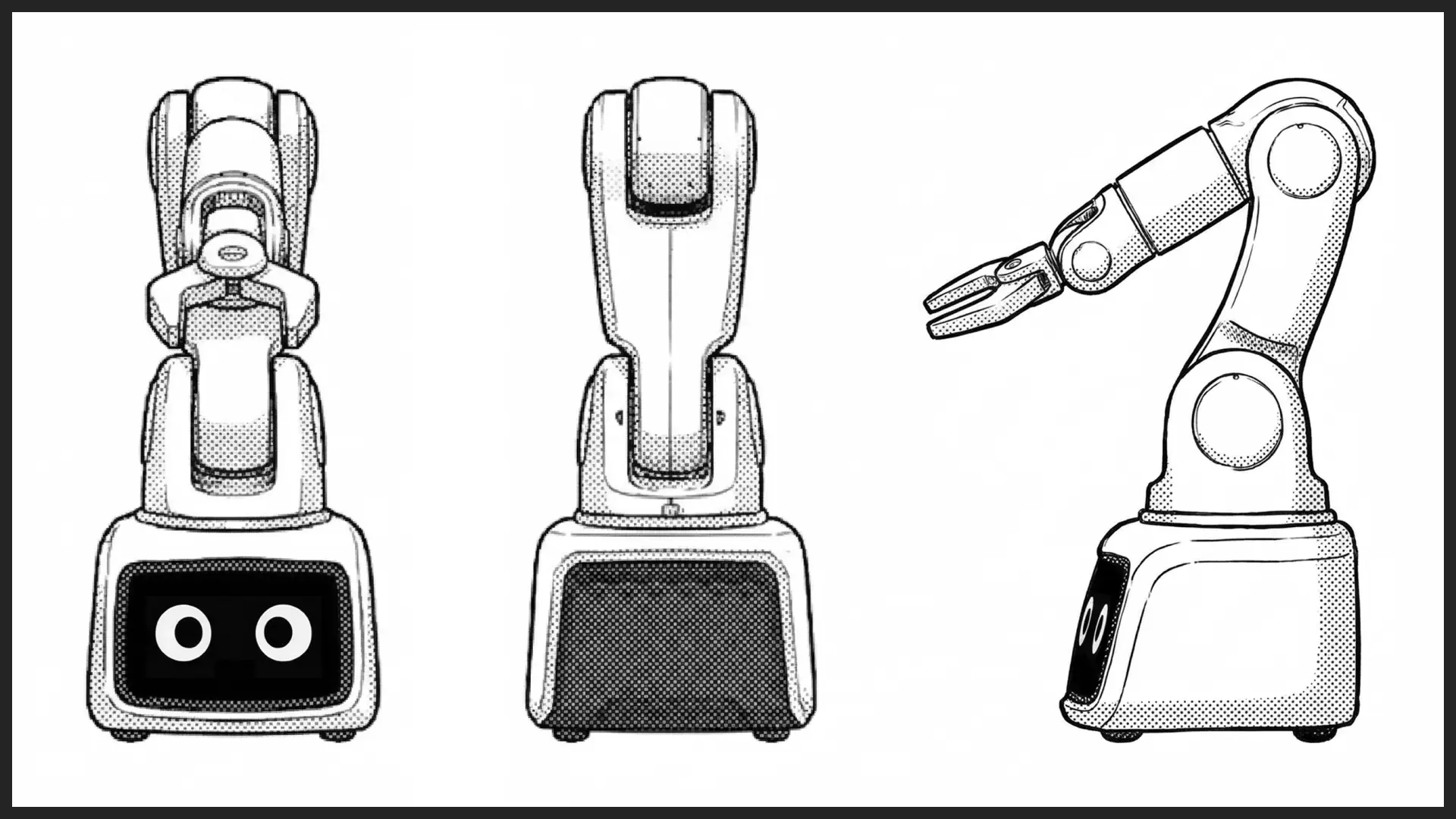
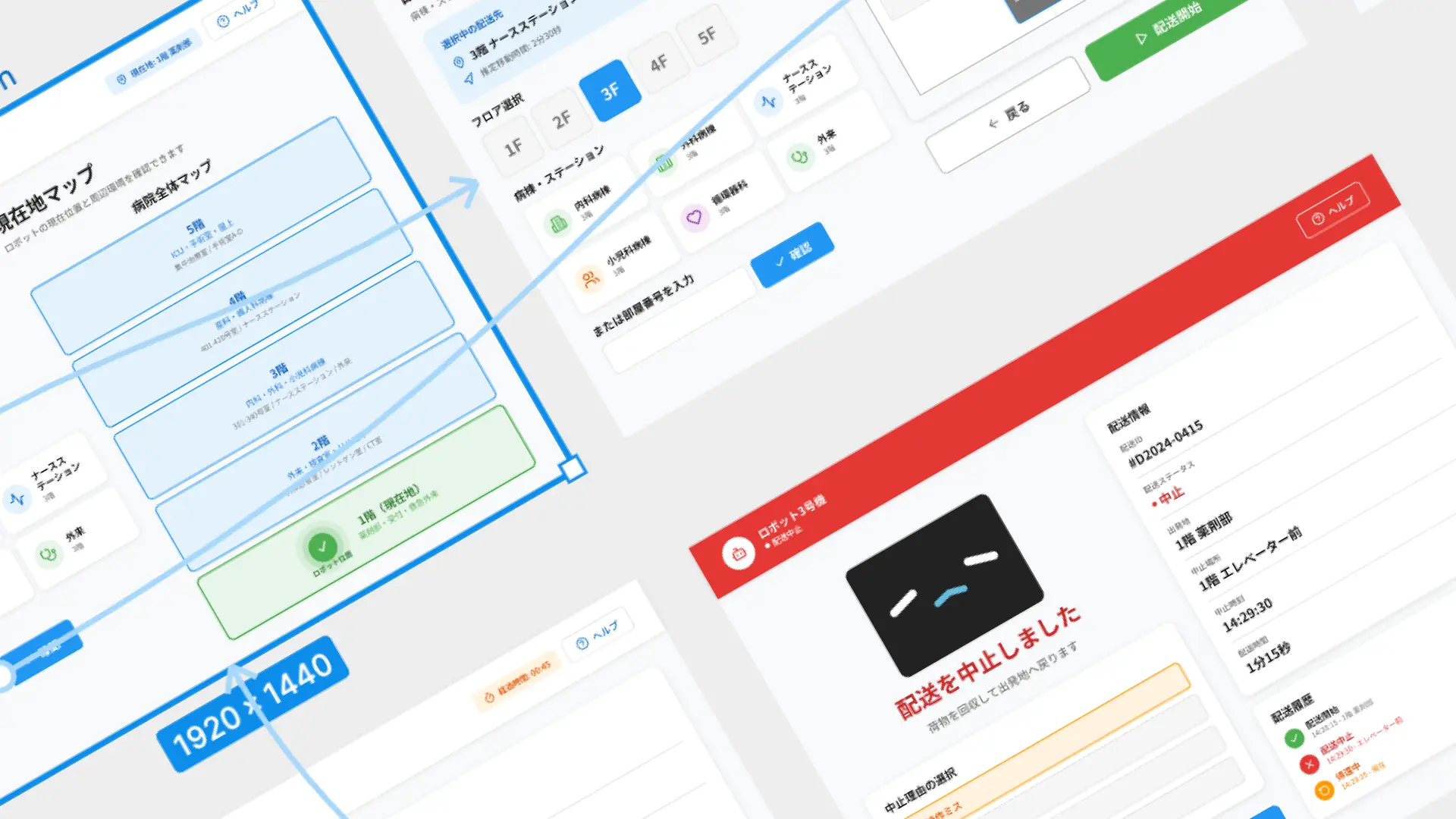
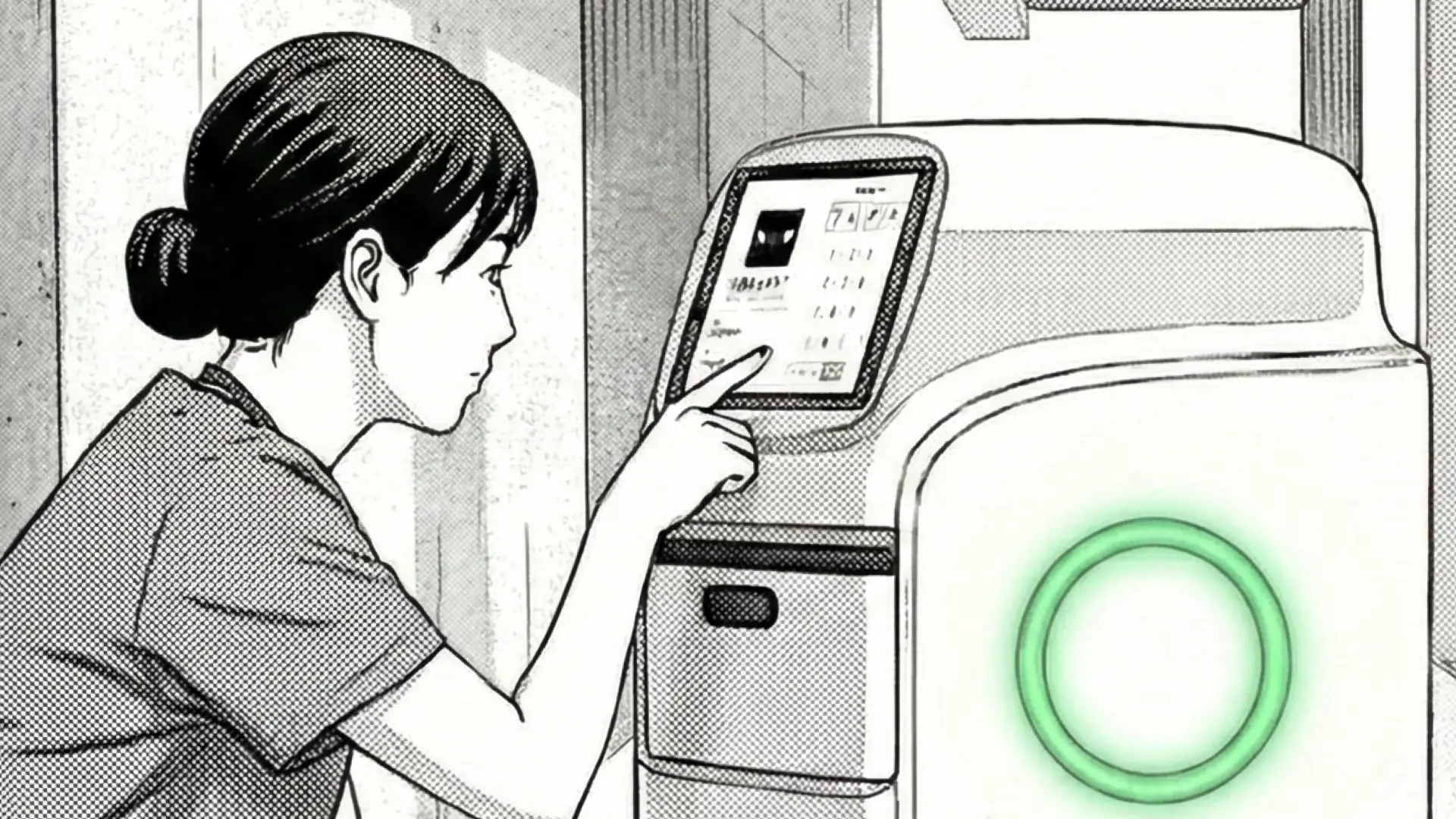
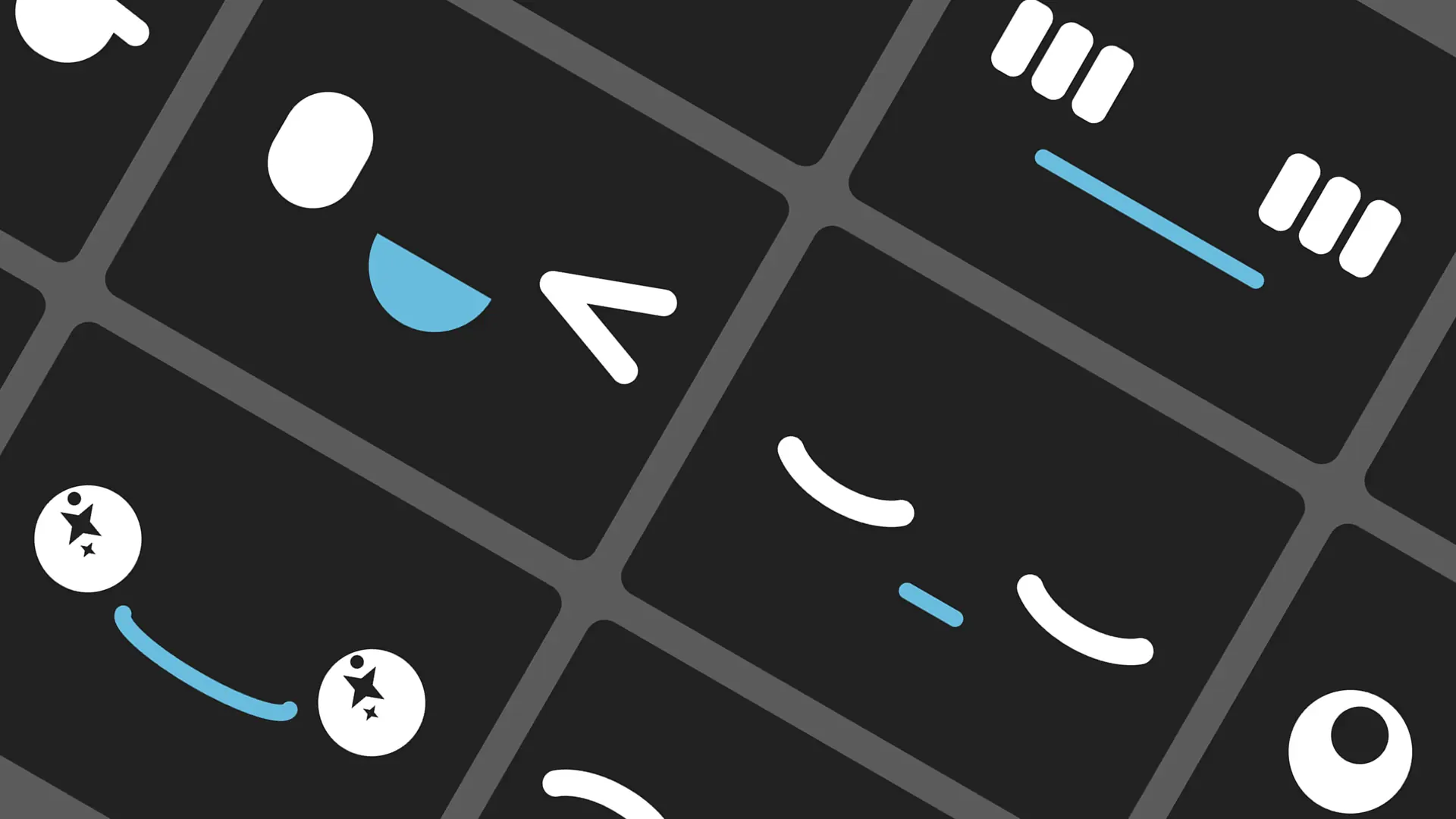
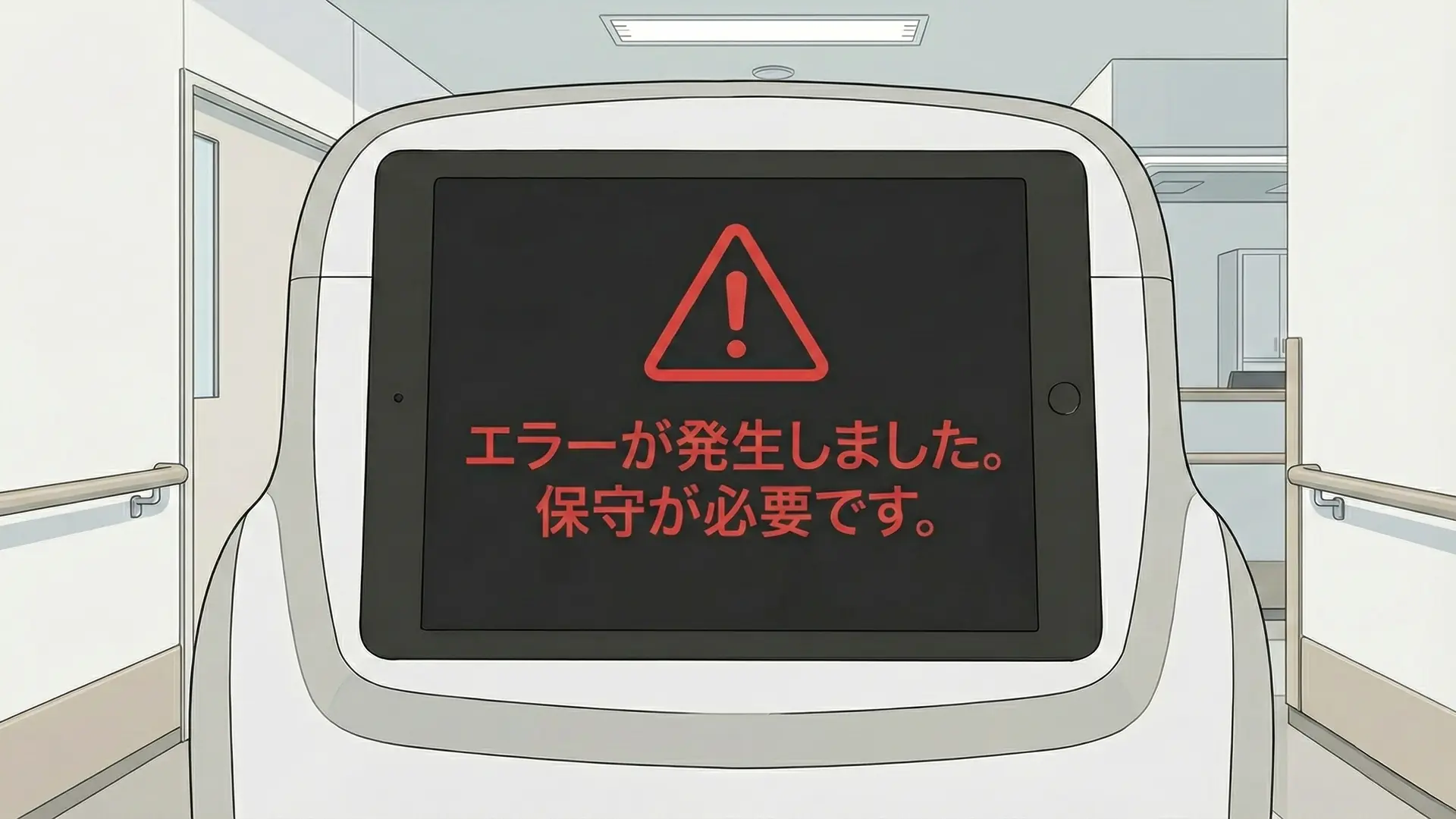
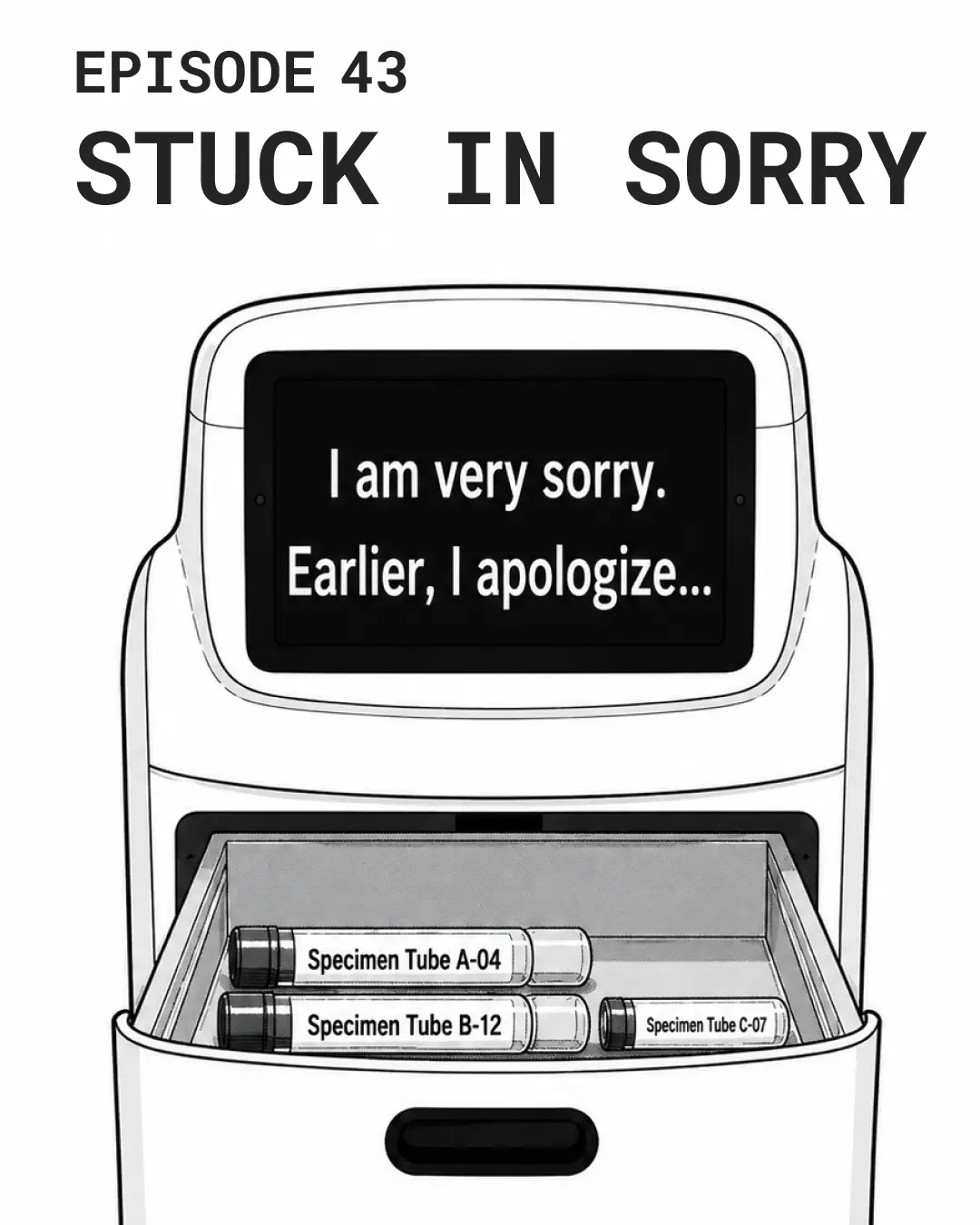
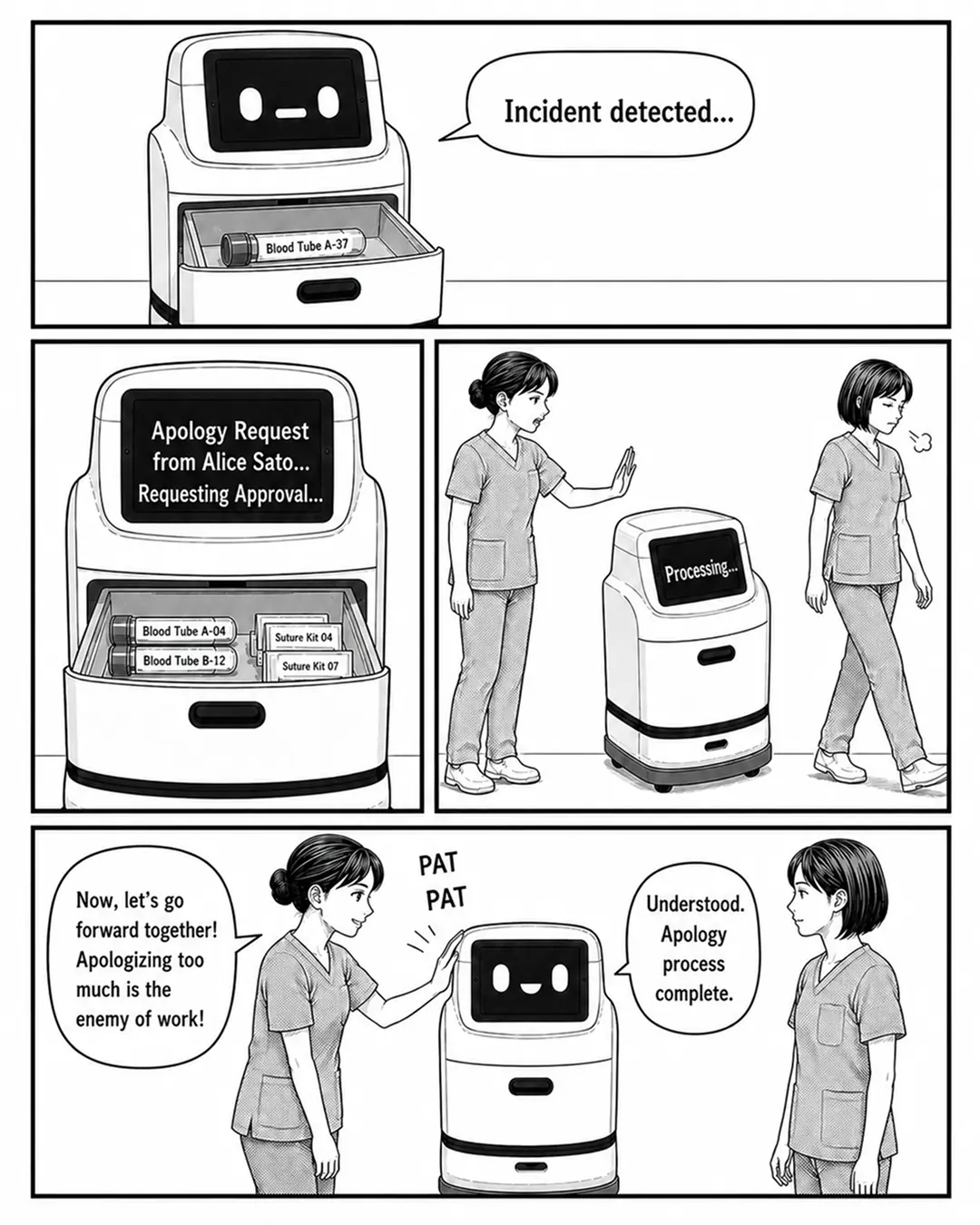
Apologizing properly after an error is the basis of trust recovery. Hakobukun misreads a specimen label for a split second, then self-corrects—a near-miss no human even notices. Yet the machine alone treats it as an "incident," displaying "I am terribly sorry" for the next 30 minutes. A sincere apology that has lost its off-switch.
■ When an apology becomes noise
The problem is not the apology but its duration. Every new delivery request is now prefaced with "About earlier, I apologize…"; Takasugi gets it, Oshiro gets it. Zero-information apologies are inserted into every task, and the actual work stops moving. Excessive apology displays drain the recipient's time and mental space.
■ Conclusion: design a half-life for apology
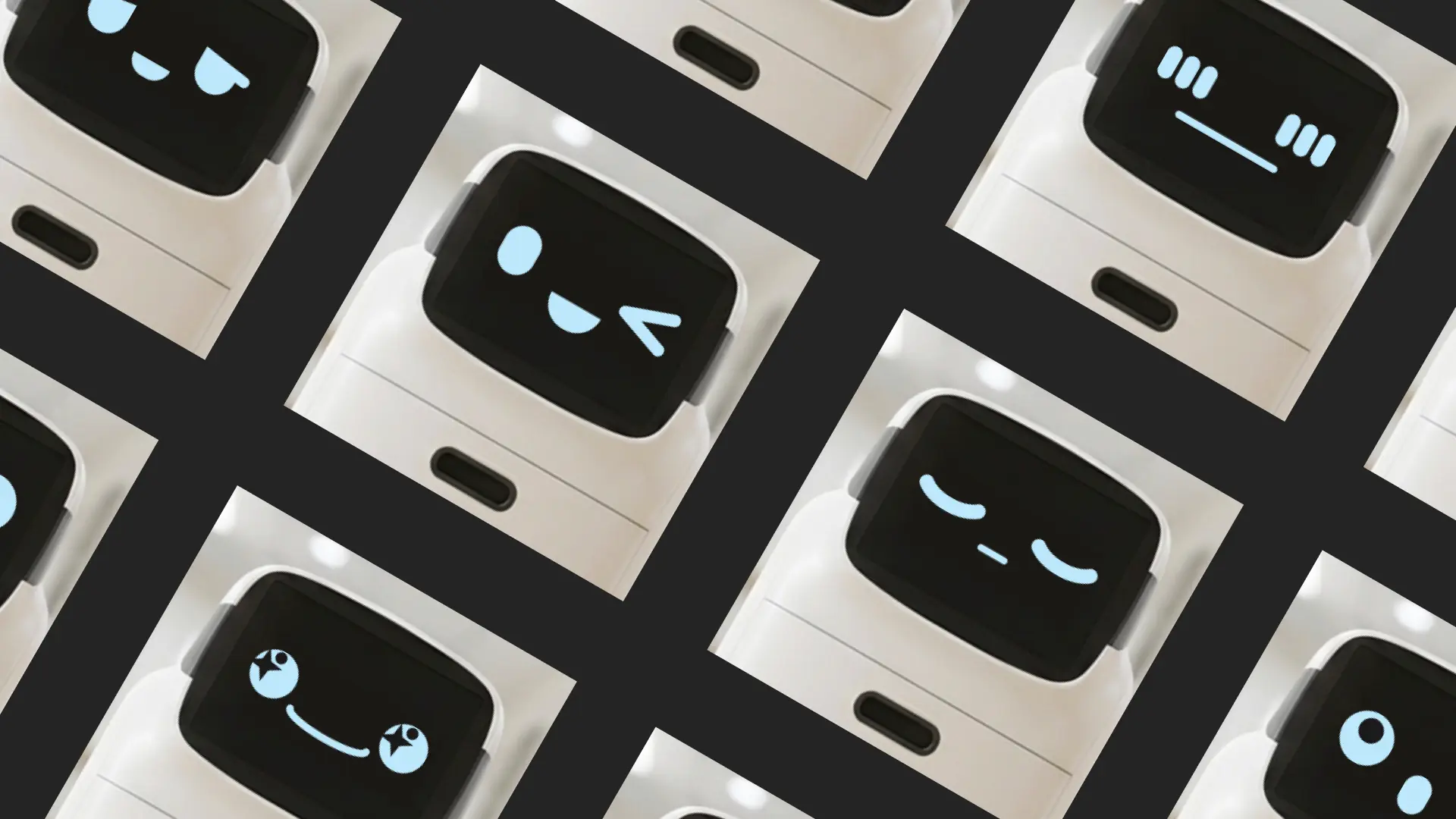
When Takasugi says "Enough—just move on," Hakobukun switches its screen instantly. The lesson is not "don't apologize" but "design an ending for the apology." Error-recovery UX should not decide whether to apologize, but how it decays—at what intensity, for how long, and when to return to normal operation. Only by designing the stopping point does trust recovery stop obstructing the work.