Telling "Stopped" from "Broken"
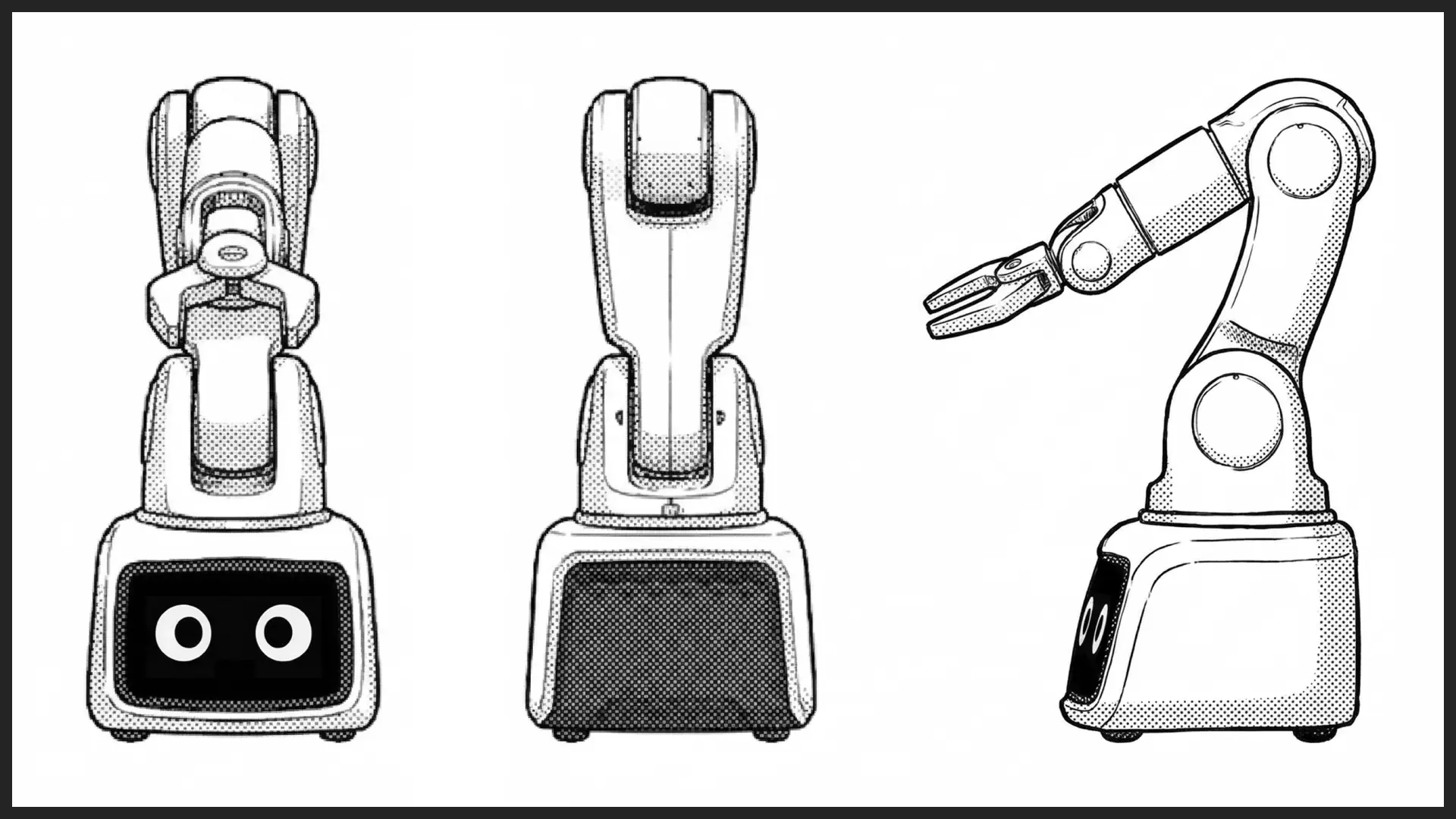
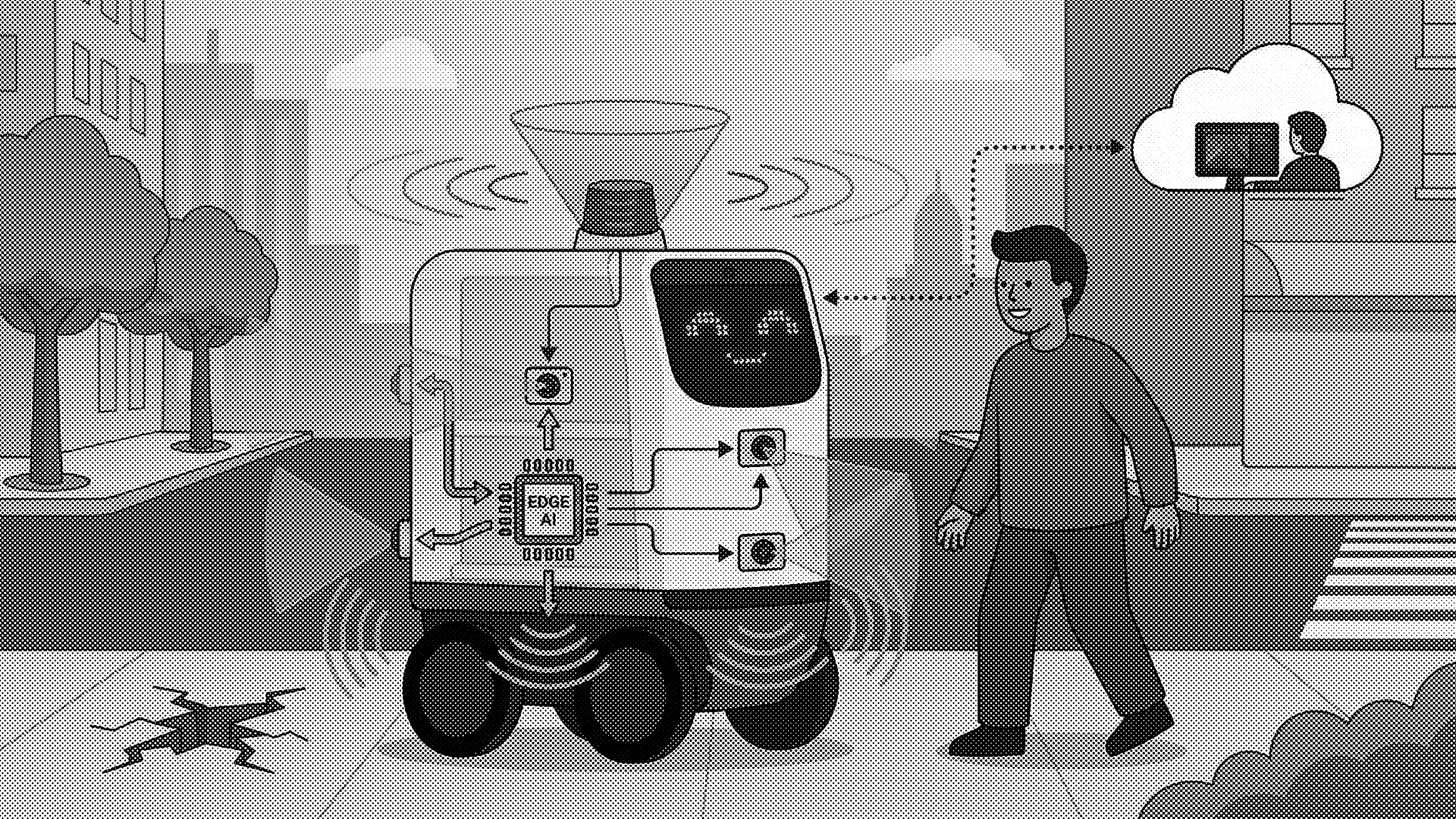
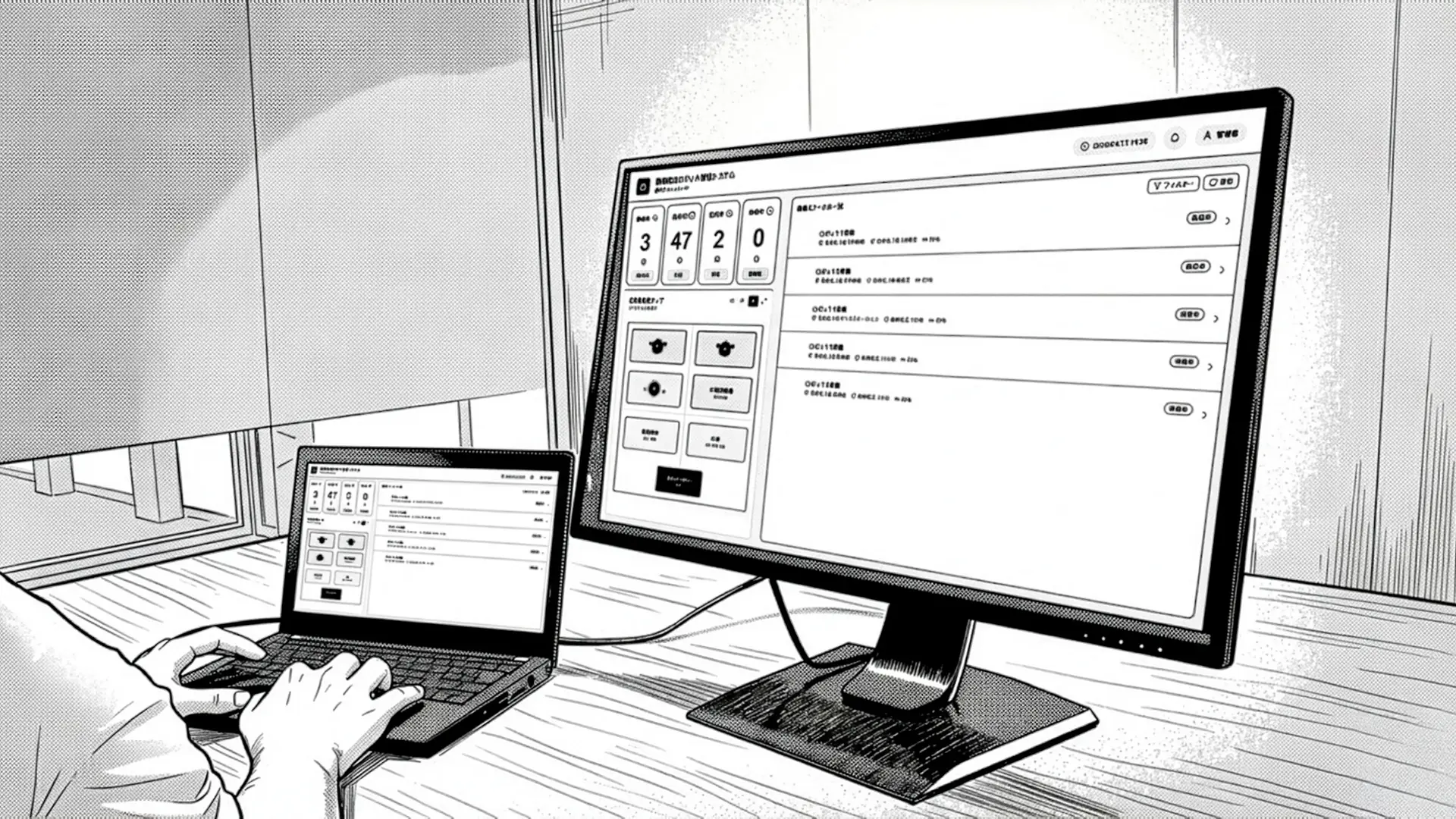
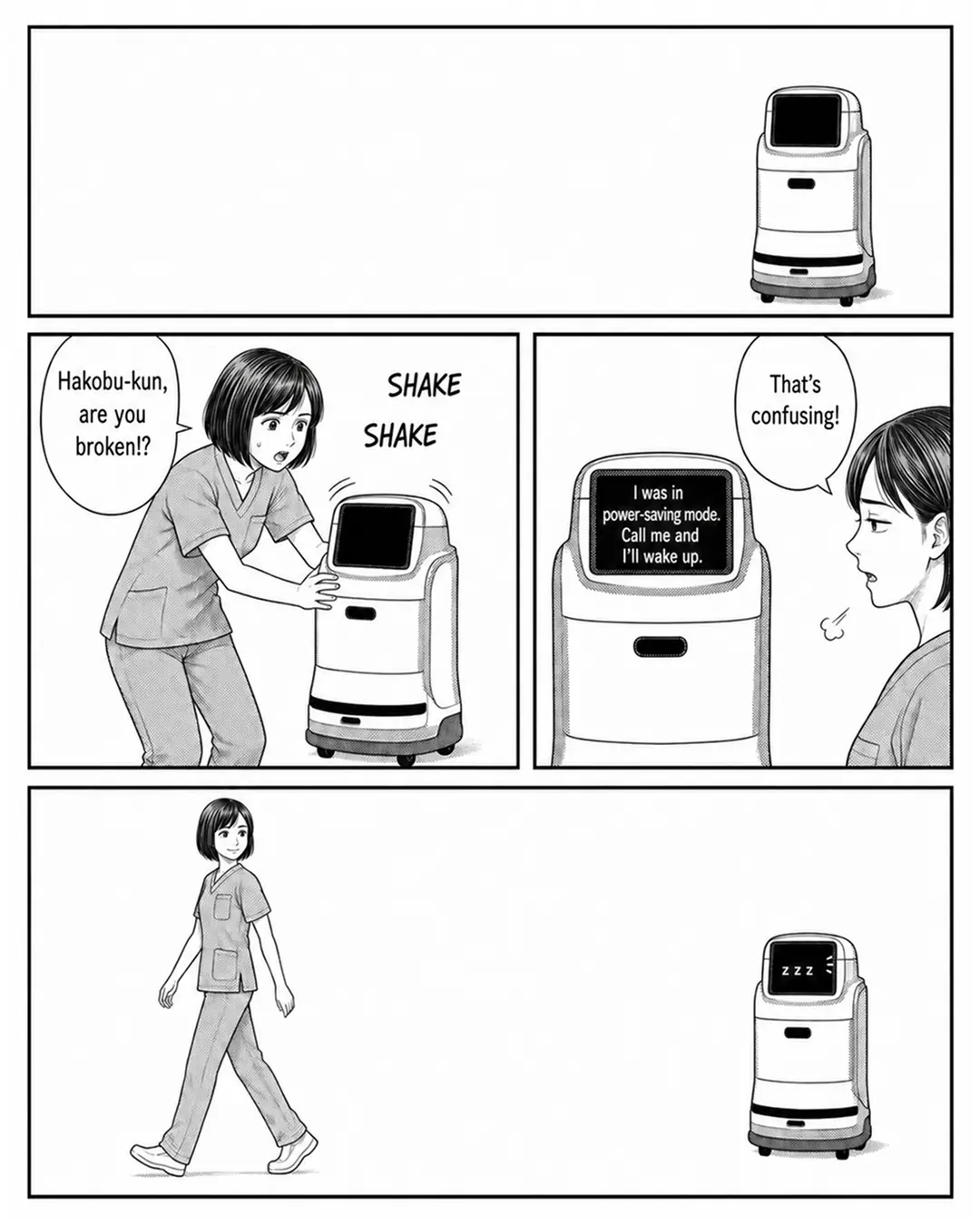
■ Silence gets misread Hakobukun in power-saving mode was working perfectly: motionless, screen off, conserving energy — optimal behavior, exactly as designed. But what Takasugi saw was a robot frozen with a dead screen. To humans, an unresponsive machine is the first sign of failure. However healthy the internal state, if it isn't visible from outside, it might as well not exist.
■ A "sign of life" needs only one bit The fix wasn't a redesign. A small blinking "z z z" in the corner of the screen — that alone reframes "stopped" as "resting." What matters isn't information volume but state distinction. Like a heart monitor conveying life with a single waveform, the essence of status display is the presence of change itself.
■ Conclusion: when not moving, show you're alive Total stillness is ideal for power saving but a failure of communication. The moment a user has to guess "is this normal?", the interface has stopped doing its job. The "z z z" costs almost nothing technically, yet preempts both anxiety and misguided intervention (the shaking!). An honest machine is one that reports even its rest.
A silent machine is indistinguishable from a broken one.