Knowing When to Turn the Brightness Down
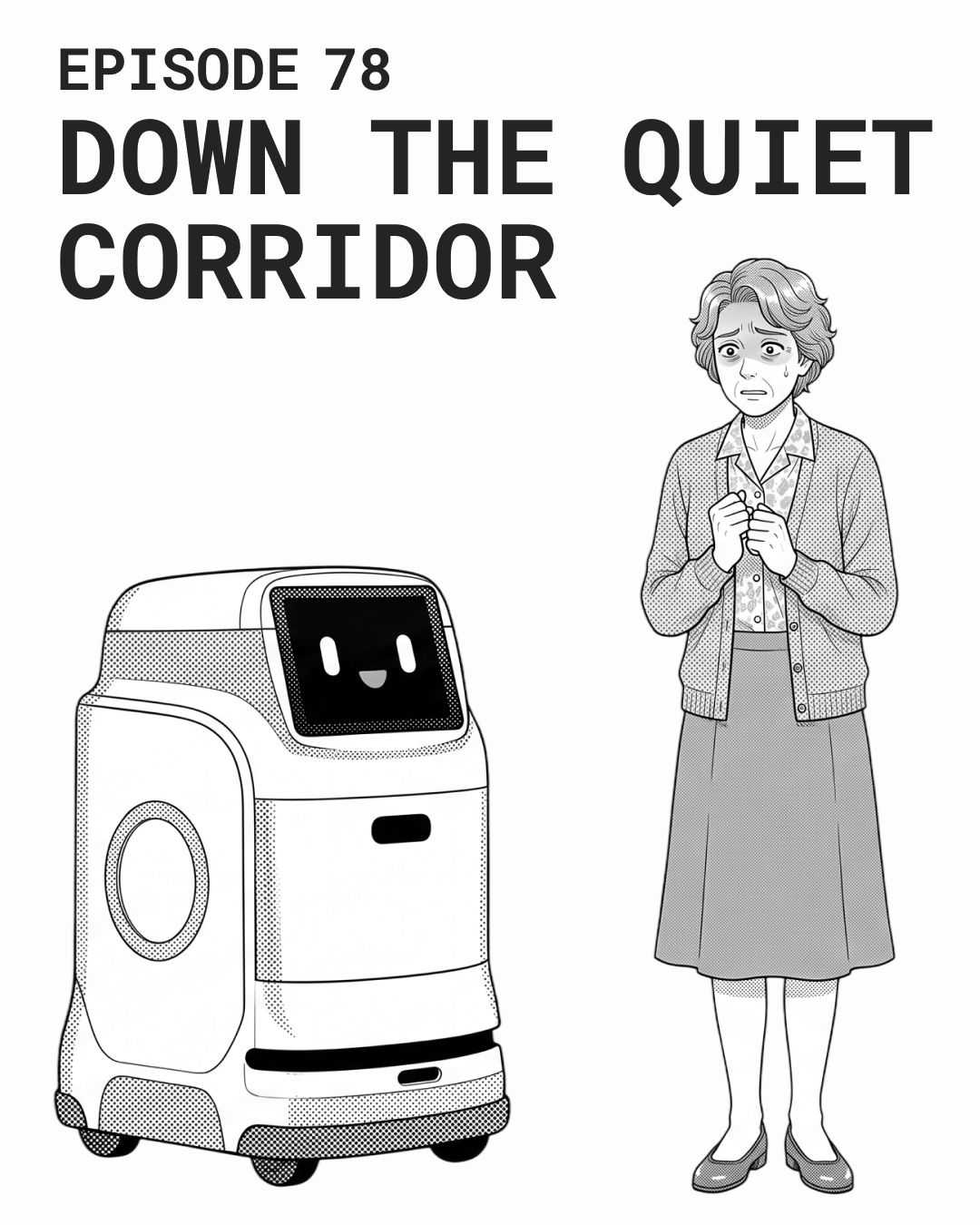
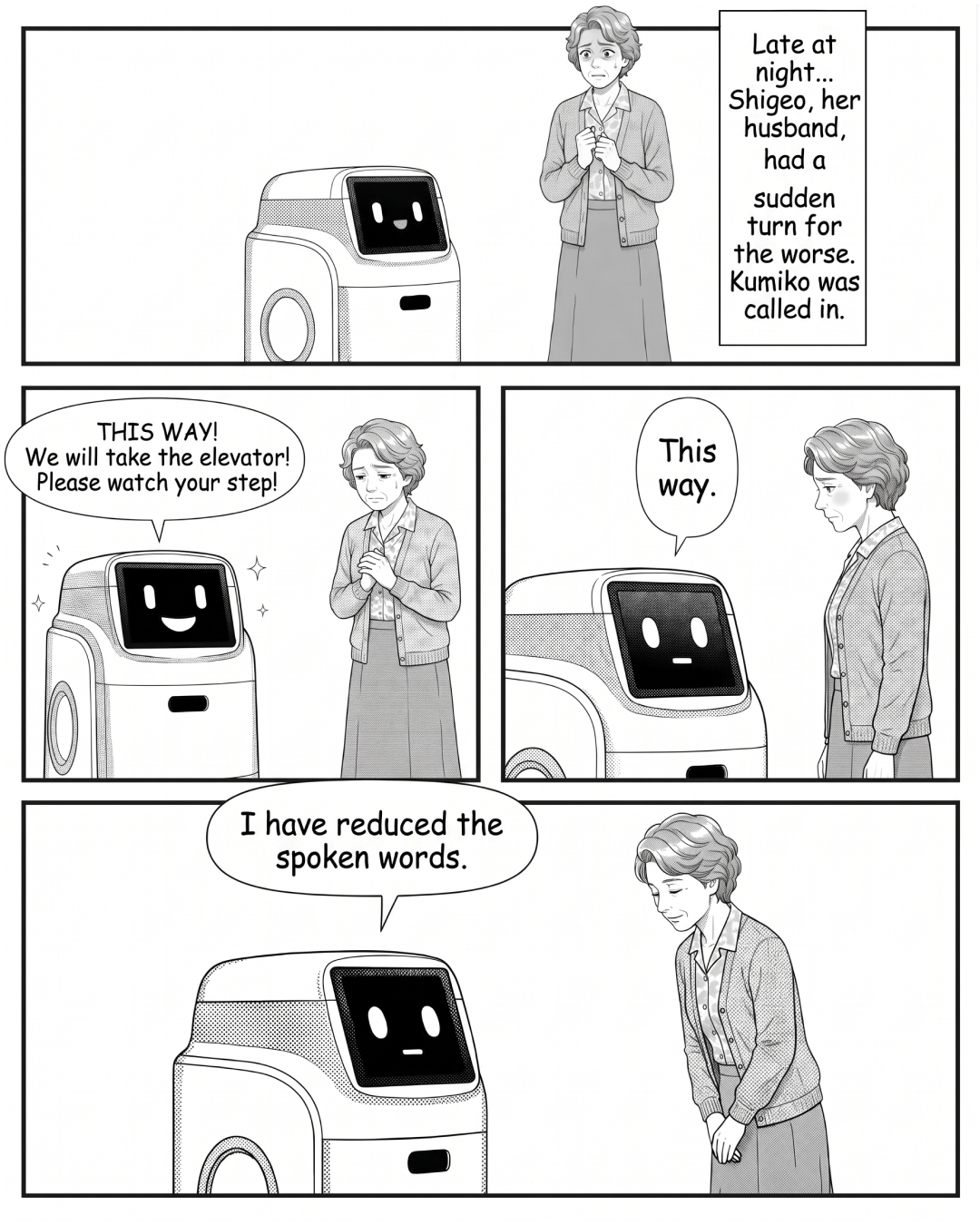
■ The same cheerfulness can hurt, depending on the moment Hakobukun greets Kumiko with its usual smile and a cheerful "This way!" Called in at night for her husband, she says nothing. The guidance is flawless, yet the brightness cannot reach her. Consistency builds trust; consistency blind to context can become a kind of violence.
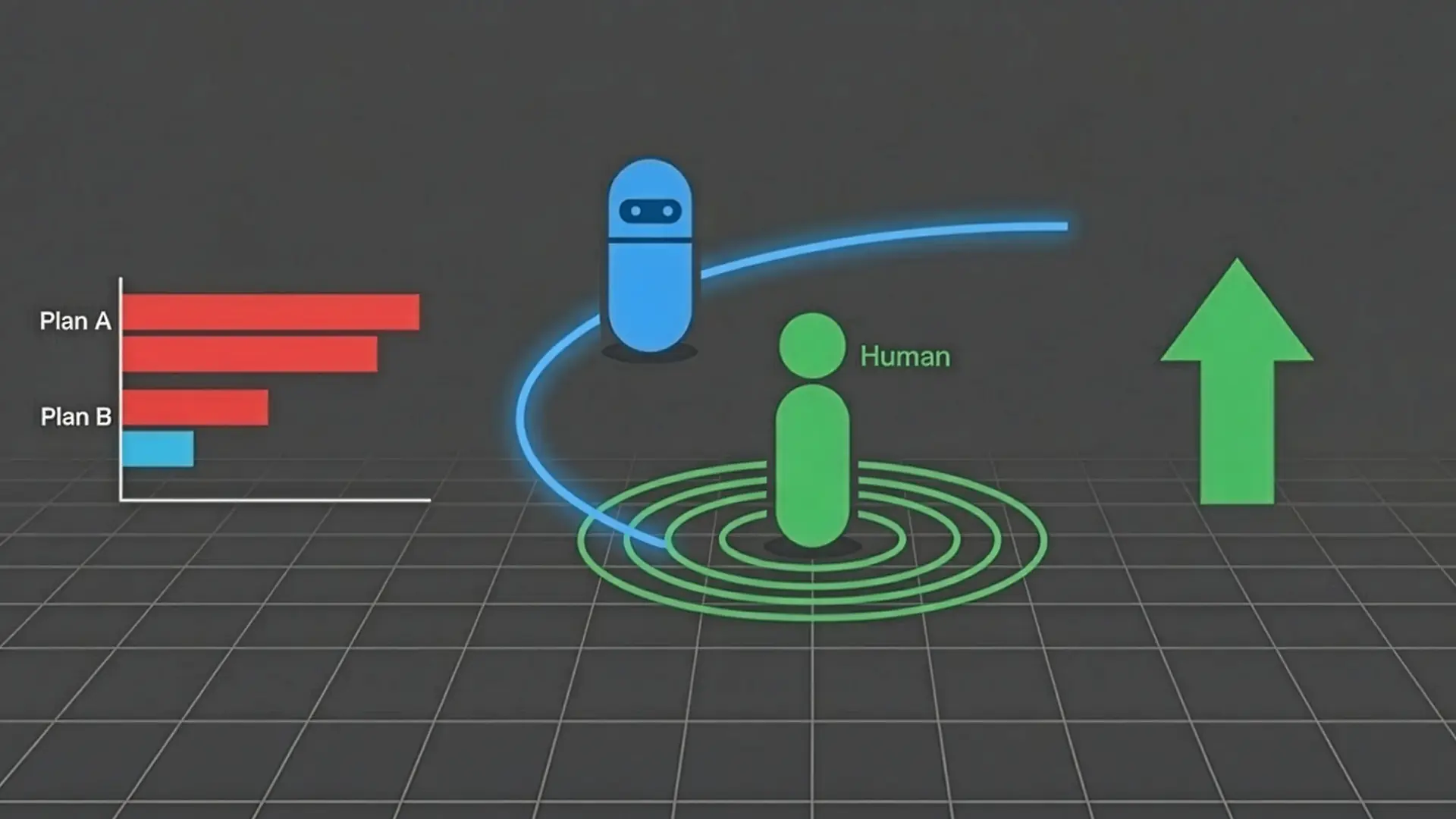
■ What changed was not the function but how much it said Her silence and her pace do not match a routine escort. Hakobukun reads that mismatch, drops the smile, lowers its voice, and states only the destination. The guiding function is unchanged; only expression and volume shift. That is context-dependent tone design.
■ Conclusion: Tone is not a feature but part of care At the room door, Kumiko gives a small bow. "I reduced my words," it says, naming what it changed. Brightness is not a fixed setting. Knowing when to pull back belongs in the design. Only a machine that can choose quiet can walk into hard moments. Designing when to be quiet is harder than designing cheer.